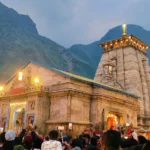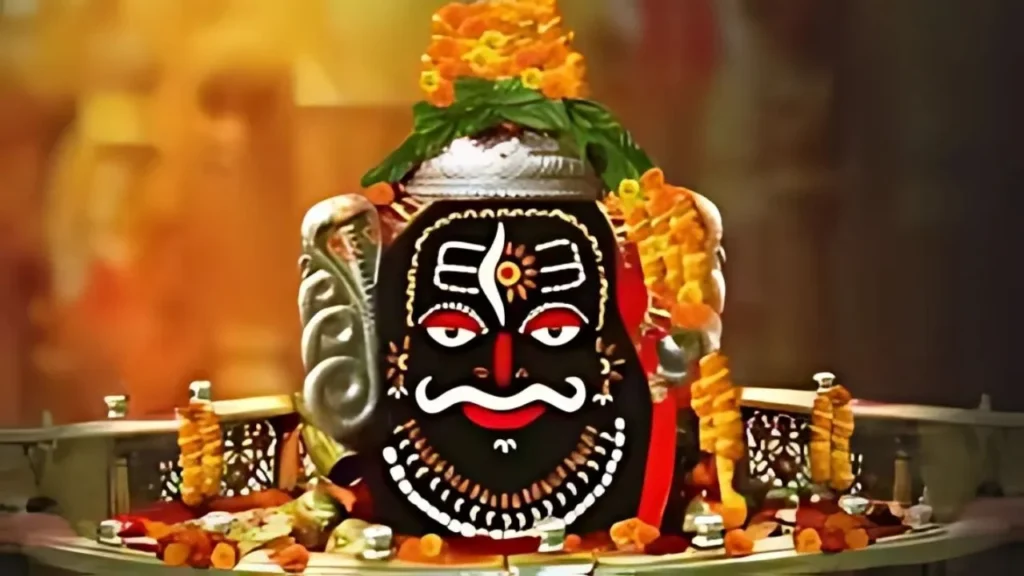

Mahakaleshwar Jyotirlinga Temple is one of the most powerful and mysterious Jyotirlingas of Lord Shiva. It stands on the ancient banks of the sacred Shipra River in Ujjain, Madhya Pradesh, India. This is not just a shrine – it is a timeless spiritual world where mythology, history, and divine energy converge.
Pilgrims from India and abroad visit Mahakaleshwar to seek blessings. They also witness the famous Bhasma Aarti with deep devotion. Moreover, they experience the strong spiritual pull of this Swayambhu temple.
Whether you love spirituality or history, the temple welcomes you warmly. You may also explore it as a traveler drawn to India’s sacred routes. As a result, the legends of Mahakaleshwar offer a journey filled with awe and devotion. Ultimately, the experience leaves every visitor with a sense of divine wonder.
Myth Behind Mahakaleshwar Jyotirlinga
The legend of Mahakaleshwar Jyotirlinga begins in ancient Ujjain. The city, then called Avanti, faced great fear. A powerful demon named Dushan troubled sages and disturbed their sacred rituals. His terror grew each day, and peace vanished quickly.
The Brahmin scholars of Ujjain prayed for help. They gathered near the Shipra River and worshipped Lord Shiva. Their devotion created strong spiritual energy. Eventually, their prayers reached Mahadev.
In response, Lord Shiva appeared in his fierce form Mahakal. He roared with cosmic power and destroyed Dushan instantly. As a result, peace returned to Ujjain.
The Mahakaleshwar Jyotirlinga emerged at that divine moment. Devotees believe it formed on its own as a Swayambhu Jyotirlinga. Therefore, the temple carries unmatched spiritual strength.
Even today, the myth inspires millions. It reminds devotees that Mahakal protects righteousness. He removes fear, destroys negativity, and guides seekers toward liberation.
Historical Journey of Mahakaleshwar
The exact origin of the Mahakala temple remains unclear. However, many experts place its existence in the pre-historic period. The Puranas state that Prajapati Brahma first established the temple. Moreover, ancient records mention Prince Kumarasena’s appointment in the 6th century BC. King Chanda Pradyota assigned him to maintain law and order at Mahakala temple.
Additionally, punch-marked coins from 4th–3rd century BC display Lord Shiva’s figure. These findings show the temple’s deep cultural presence in Ujjain. Furthermore, several ancient poetic texts refer to Mahakala temple. These texts describe the temple as both magnificent and grand.
The roofs of ancient temples were mostly flat. Due to this, Kalidasa described the temple as Niketana in the Raghuvamsam. The king’s palace stood close to the temple. Moreover, Kalidasa offered a vivid description of the Mahakala temple. He shared this description in the early part of Meghadutam (Purva Megha).
After the Gupta empire fell, many dynasties ruled Ujjain. The Maitrakas, Chalukyas, Later Guptas, Kalachuris, and Pusyabhutis gained power. Later, the Gurjara Pratiharas and Rashtrakutas also controlled the region. However, every dynasty bowed before Mahakala with deep respect. They offered endowments and alms to the deserving. During this period, many temples and sacred sites emerged in Avantika. Moreover, several Tirthas, Kundas, Vapis, and gardens took shape. Many Shaivite temples also flourished in the region. Among them, the temples of the 84 Mahadevas held great importance.
Islamic Invasion
Iltutmish destroyed the temple complex during his raid on Ujjain in 1234–35. He dismantled the Jyotirlinga during the attack. Moreover, people believe he threw it into the nearby Kotiteerth Kunda. He also stole the Jaladhari during the invasion. Later, Jalaluddin Khalji attacked the temple again. Alauddin Khalji also repeated the assault. However, the temple regained life during Maratha rule. Maratha Diwan Ramachandra Sukthankar rebuilt and revived it in the 18th century.
Architecture of Mahakaleshwar Temple
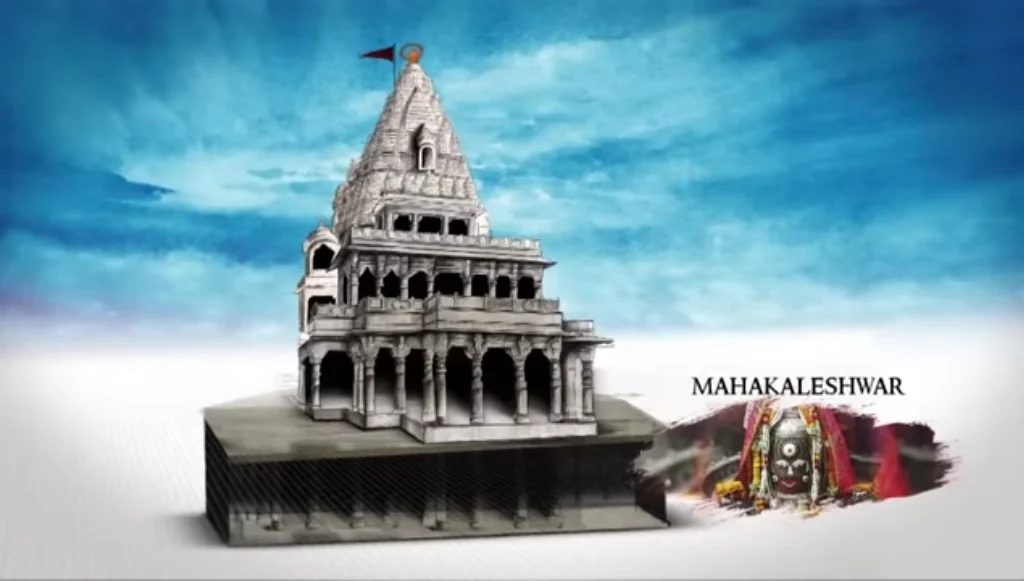
The temple has three storeys. The lingams of Mahakaleshvara, Omkareshvara, and Nagachandresvara occupy the lower, middle, and upper levels. Pilgrims can view Nagachandresvara only on Naga Panchami.
A large Kunda named Koti Tirtha stands inside the complex. The builders designed this Kunda in the Sarvatobhadra style. Moreover, devotees treat both the Kunda and its water as sacred. Along the stairs near the Kunda, visitors can see many ancient images. These sculptures reflect the artistic excellence of the Paramara period.
To the east of the Kunda stands a spacious verandah. This verandah leads to the pathway that enters the garbhagriha. In its northern cell, priests worship the images of Sri Rama and Goddess Avantika.
On the southern side of the main shrine stand several small Shaivite temples. The Shinde rulers built these temples during their regime. Among them, the temples of Vrddha Mahakaleshvara, Anadi Kalpesvara, and Saptarshi hold special importance. These shrines also showcase remarkable architectural beauty.
The lingam of Mahakaleshvara appears colossal and powerful. The silver-plated Naga Jaladhari enhances its divine presence. Moreover, the silver-covered roof of the garbhagriha adds extra grandeur.
Inside the sanctum, small images of Ganesha, Kartikeya, and Parvati also appear. Devotees admire these idols during darshan. Classical eulogies praising Lord Shiva decorate the surrounding walls. The Nanda Dipa burns continuously inside the sanctum. Its steady flame symbolizes eternal divine energy.
In the exit path, a wide hall welcomes the visitors. Here, a stunning metal-coated stone Nandi sits in a humble posture. This Nandi idol attracts everyone with its serene expression.
The courtyard opposite the Omkareshvara temple increases the complex’s beauty. Two pillared projections stand beside it and face the east. These structures contribute greatly to the temple’s architectural charm.
The Mahakaleshvara temple blends Bhumija, Chalukya, and Maratha architectural styles. This unique mixture gives the temple its distinct identity. The shikhara with its mini-sṛingas appears particularly striking. In recent years, the upper part of the shikhara received gold plating.
Geographical Location of Mahakaleshwar Temple
Mahakaleshwar Jyotirlinga Temple stands on the ancient banks of the sacred Shipra River in Ujjain, Madhya Pradesh, India.
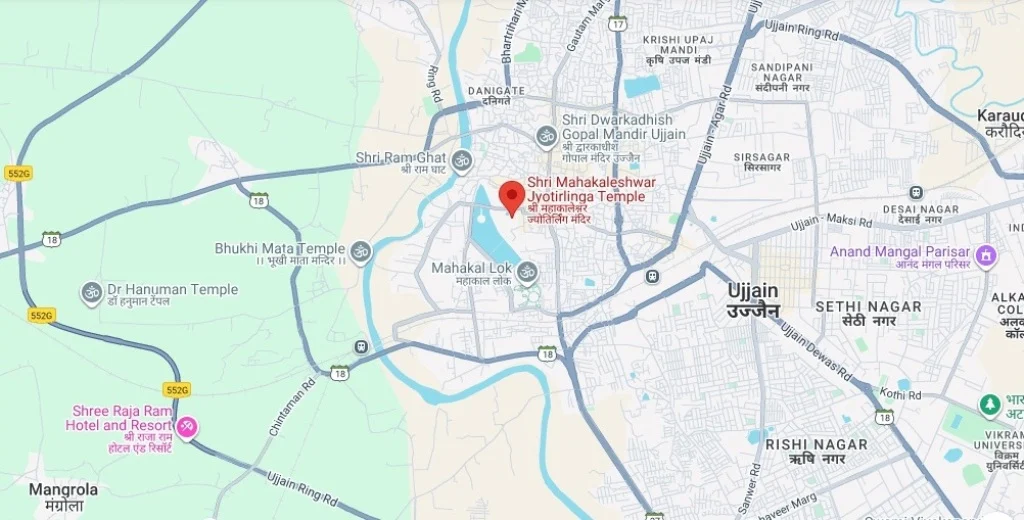
Here’s a quick overview:
| Aspect | Details |
|---|---|
| Coordinates | Approximately 23°10’58″N, 75°46’6″E. |
| State | Madhya Pradesh |
| City | Ujjain |
| Elevation | ~ 494 meters (1,621 feet) above sea level |
| River | Shipra (Kshipra) |
How to Reach Mahakaleshwar Temple
- By Air: Nearest airport is Devi Ahilyabai Holkar Airport in Indore (approx. 53 K.m.). Regular flights available from Mumbai, Delhi, Ahmedabad, Gwalior.
- Railway: The nearest railway station to the Mahakaleshwar Temple is Ujjain Junction, which is approximately 2 km away. It is well connected by railway line to Ahmedabad, Rajkot, Mumbai, Fouzabad, Lucknow, Dehradun, Delhi, Banaras, Kochin, Chennai, Bangalore, Hyderabad, Jaipur, Howrah and many more.
- By Road: Ujjain is directly connected by road to Indore, Surat, Gwaliar, Pune, Mumbai, Ahmedabad, Jaipur, Udaypur, Nasik, Mathura.
Stay options near Mahakaleshwar Temple
Several accommodation options are available at Ujjain near Mahakaleshwar Temple. Some are given below.
- Krishnaalay Guest House
176-B Vivekanand Colony Near Lokmanya Tilak School / Railway Station, Ujjain – 456010, India. - Kalptaru Home Stay
Bhagat Singh Marg, Ujjain – 456001, India. - Shree Agrawal Yaatri Grah And Lodge
Chandrashekhar Azad Marg, Near Rajput Dharmashala, Ujjain – 456006, India.
Puja/Abhishek in Mahakaleshwar Temple
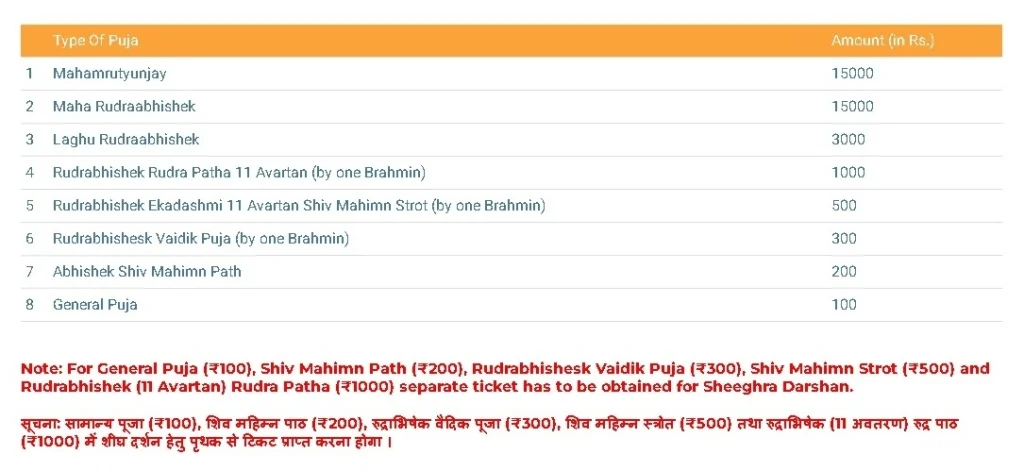
Best time to visit: October to March
Shree Mahakaleshwar Temple timings: 4:00 AM to 11:00 PM
Temple Ticket Price: No entry fee.
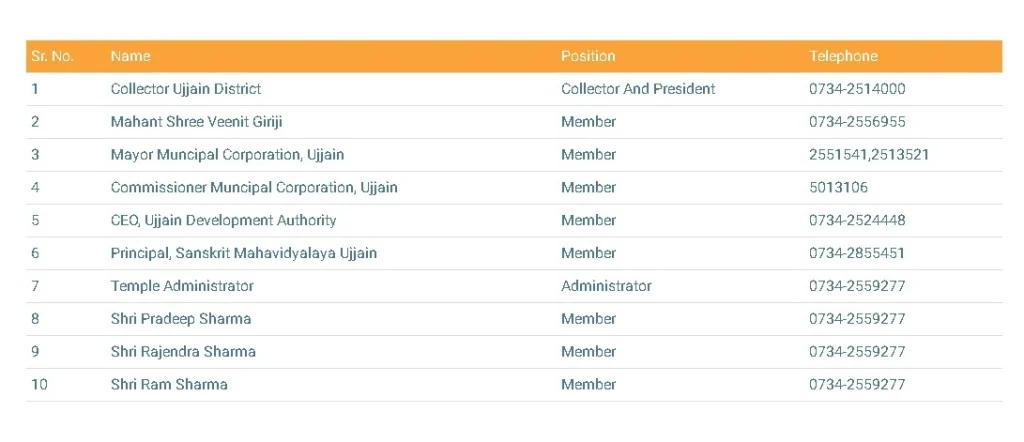
Mahakaleshwar Temple Trustees
Places of attraction near Mahakaleshwar Temple
Kal Bhairava Temple : Kal Bhairava Temple stands as a major Hindu shrine in Ujjain. It is dedicated to Lord Kal Bhairava, a fierce form of Shiva. He represents both annihilation and protection. Moreover, devotees give the temple great religious importance. Many people also consider it closely linked to the twelve Jyotirlingas.
Harsiddhi Temple : Harsiddhi Temple stands as a renowned Hindu shrine in Ujjain. It is dedicated to the powerful goddess Harsiddhi Mata. Moreover, the temple holds deep religious importance for devotees. It attracts worshippers from many distant places. People also believe it is one of the 51 Shakti Peethas in India.
Mangalnath Temple : Mangalnath Temple is believed to be the birthplace of Mars according to the Matsya Purana. It offers a serene escape from the city’s bustle. Moreover, this ancient temple is dedicated to Lord Shiva.
Gomti Kund : Gomti Kund is a famous sacred water tank in Ujjain. It holds great importance in Hindu mythology. Moreover, devotees believe it is linked to many legends and rituals.
Kalidasa Academy : The Madhya Pradesh Government established the Kalidasa Academy in 1978. It focuses on the study and research of Sanskrit. Moreover, it serves as a centre for Kalidasa’s poems and dramas. The academy also stands on a spacious 3374-hectare campus.
Key Rituals at Mahakaleshwar Temple
Bhasma Aarti : The most unique ritual begins daily at 4 AM. Priests bathe the deity with sacred ash from cow dung. This ritual symbolizes both creation and destruction. Moreover, men must wear a dhoti, and women must wear a saree.
Abhishek : Priests perform a ritualistic bathing of the Shivalinga with water, milk, honey, curd, and herbs. They conduct this ritual at different times of the day. Moreover, it holds special importance during the month of Shravan.
Aartis : Priests offer various light rituals throughout the day. They perform Shringar Aarti to adorn the deity. They conduct Bhog Aarti during the food offering. Moreover, they perform Sandhya Aarti as the evening prayer.
Maha Mrityunjaya Jaap : Devotees chant mantras for healing and protection. They usually perform these chants during auspicious times. Moreover, priests conduct the Ganga Aarti on the ghats after sunset. This lamp-offering ritual becomes especially vibrant during festivals.
Conclusion
Mahakaleshwar is not just a temple; it is an experience that transforms every visitor. The legends, the rituals, and the ancient architecture create a sacred atmosphere filled with power and devotion. Moreover, the spiritual energy of Mahakal inspires faith, peace, and inner strength. Whether you visit for worship or curiosity, the temple leaves you deeply moved. Ultimately, a journey to Mahakaleshwar becomes a timeless connection with Lord Shiva himself.
Frequently Asked Questions (FAQs)
Visitors are expected to dress modestly and cover their heads before entering the sanctum sanctorum. It is advisable to wear traditional Indian attire or carry a scarf to adhere to the dress code and respect religious customs.
The mysteries of Mahakaleshwar Temple revolve around its south-facing Jyotirlinga. This feature makes it the only Dakshinamukhi Jyotirlinga. Moreover, the powerful Swayambhu lingam adds to its uniqueness. The temple also hosts the enigmatic Bhasma Aarti each morning.
The entire aarti lasts for about 45 minutes to an hour. The first part of the aarti, when the shringar is done, is sublime and well worth the scramble. However, the actual bhasm part – which is often hyped to no end – lasts only about a minute and a half.