
Lalita Devi Temple is one of the sacred Shaktipeethas, dedicated to Goddess Lalita Devi. According to legend, this is the place where the fingers of Goddess Sati fell on the banks of the Yamuna River, and Bhagwati Lalita Devi appeared here. The old temple was renovated by Prabhudatta Brahmachari on November 16, 1987.
Today, the temple stands 103 feet tall with a 41-foot-high entrance gate and serves as a major center of devotion. During Navratri, the temple celebrates the nine forms of the Goddess with unique decorations each day, attracting thousands of devotees.
What makes this temple so unique? Why is it still off the radar for many spiritual pilgrims? Let’s explore.
Mythology: Seat of the Divine Feminine
According to the Hindu Puranas, Sati, the daughter of Prajapati Daksha, married Shiva against her father’s wishes. Daksha performed a grand yajna (sacrifice) but did not invite Sati or Shiva. Even so, Sati went to the yajna, where Daksha ignored her and insulted Shiva. Unable to bear the insult, Sati offered herself into the fire. Filled with grief, Shiva wandered the universe carrying her half-burnt body. At last, Vishnu used his Sudarshan Chakra to cut her body into 51 parts, which fell on different places across the earth. Each of these places became a Shakti Peeth.
According to ancient belief, Sati’s fingers fell at Prayagraj, sanctifying the site as a Shaktipeetha. Devotees revere Goddess Lalita Devi as an incarnation of Mahashakti—a fierce yet compassionate mother who protects her followers and grants their wishes. Scriptures like the Matsya Purana reference this temple as one of the three most powerful Shaktipeethas, alongside those in Kashi and Vindhyachal.
You may also explore four Adi Shaktipeethas: Vimala, Tara Tarini, Kamakhya and Kalighat.
Historical Background: Tracing the Temple’s Legacy Through Time
As a history reader, one must rely not just on legends, but also on inscriptions, architectural styles, and referenced texts to trace the lineage of sacred spaces like the Lalita Devi Temple, Prayagraj. Although this Shaktipeetha’s origins stem from Puranic lore, classical sources and regional records clearly reveal its historical footprint.
The Matsya Purana offers the earliest known mention of Lalita Devi in Prayag, describing her as one of the three prime goddesses of the region, alongside Vindhyavasini and Annapurna of Kashi. This reference firmly establishes her worship at least as early as the Gupta period (4th–6th century CE), a time when Prayag flourished as a spiritual and cultural center under royal patronage.
Late Gupta to early medieval era
Archaeological evidence, such as temple fragments and carved pillars discovered in the vicinity, point to temple activity during the late Gupta to early medieval era (7th–10th century CE). Several historians believe that a significant temple structure once stood here during the rule of the Pratiharas, known for reviving Hindu temples after periods of iconoclastic attacks.
The temple faced substantial challenges during the Delhi Sultanate and Mughal period, yet it survived—likely due to its inconspicuous location in Meerapur and the resilience of local Brahmin communities who preserved its worship traditions discreetly. It’s noteworthy that Abul Fazl, in the Ain-i-Akbari, lists Prayag as a vital pilgrimage hub, though without specific reference to Lalita Devi—underscoring the underground nature of Hindu temple worship during this era.
During the 18th and 19th centuries, with the decline of Mughal control and the rise of regional powers like the Marathas and Awadh Nawabs, temple patronage saw a resurgence. Several copper plate grants and land donation records from the British archival documents mention endowments to the “Devi at Meerapur,” a reference believed to be pointing to Lalita Devi.
In modern times, the temple’s significance as a Shaktipeetha was reaffirmed by Sanskrit scholars and priests who compared oral traditions with scriptural descriptions. Today, it stands not only as a religious site but also as a living testament to the continuity of indigenous faiths through centuries of change.
Architecture of Lalita Devi Temple
The temple follows the traditional Nagara style of architecture, which is common in northern India. Its design is inspired by the Sri Yantra, a sacred geometric pattern used to worship the Goddess. Standing 108 feet tall, the temple is a stunning landmark made of red sandstone and white marble.
The main shrine is dedicated to Goddess Lalita Devi, while a smaller shrine honors Lord Shiva, worshipped here as Lalitheshwar Mahadev. The Shiva Lingam in this shrine is made of a special metal called mercury (Parada). The temple complex also features idols of Sankatmochan Hanuman, Lord Rama, Lord Lakshmana, Sita Devi, and the Navagrahas (nine celestial planets).
Geographical Location of Lalita Devi Temple
Lalita Devi Temple is situated in the Meerapur area of Prayagraj, Uttar Pradesh. Unlike the bustling ghats or touristy spots near Sangam, this temple nestles in a peaceful residential zone, making it ideal for seekers looking for tranquility and spiritual introspection.
Here’s a quick overview:
| Aspect | Details |
|---|---|
| Coordinates | 25.4227° N, 81.8282° E |
| State | Uttar Pradesh |
| District | Prayagraj |
| Elevation | ~608 feet above sea level |
Nearby landmarks: Close to Khusro Bagh and Triveni Sangam, yet separated enough to retain its calm atmosphere.
How to Reach Lalita Devi Temple, Prayagraj
By Air:
The nearest airport is Prayagraj Airport (IXD) approximately 12 kilometers from the city of Prayagraj and the temple.
By Train:
The nearest railway hub is Prayagraj Junction (formerly Allahabad Junction), about 6 km away. Autos and taxis are easily available.
By Road:
Prayagraj is well connected by highways to major cities like Varanasi, Ayodhya, and Lucknow.
Where to Stay in Prayagraj
Prayagraj offers everything from budget lodges to premium hotels. For spiritual travelers, I recommend staying near Civil Lines or Triveni Sangam.
Hotel Prayag: 73, Noorullah Rd, near Prayagraj, junction, Miurabad, Prayagraj, Uttar Pradesh 211003
Max Hotel Prayagraj: Multi Functional Complex , Civil Lines Railway Station Compound, Prayagraj, Uttar Pradesh 211001
Hotel Saket: Mahatma Gandhi Marg, Civil Lines, Prayagraj, Uttar Pradesh 211001
Best Time to Visit Lalita Devi Temple
The temple is open year-round, but certain seasons offer a more fulfilling experience:
| Season | Months | Attraction |
|---|---|---|
| Winter | Nov – Feb | Pleasant weather, less crowd |
| Navratri Season | Mar-Apr & Sep-Oct | Grand celebrations, high energy |
| Monsoon | Jul – Sep | Lush surroundings, spiritual aura |
| Avoid Summer | May – Jun | Extremely hot & humid |
Lalita Devi Temple Timings
The temple is open every day of the week, allowing devotees to seek the blessings of Goddess Lalita. It opens at 5:00 AM and closes at 9:00 PM.
| Opening Time | 5:00 AM |
| Closing Time | 9:00 PM |
Festivals: When the Temple Comes Alive
While daily rituals keep the temple vibrant, it truly comes alive during:
- Navratri: The temple is beautifully decorated, and special pujas, havans, and bhajans echo through the nights.
- Durga Ashtami: A large number of devotees gather for blessings.
- Magh Mela: Held around January-February, this coincides with the spiritual Kalpavas near Sangam, and the temple sees a major surge in footfall.
During my visit in Chaitra Navratri, the energy was electrifying. The temple courtyard resonated with chants of “Jai Mata Lalita,” and local women performed the Kanya Pujan ritual with absolute devotion.
Local People & Culture
The local people of Meerapur in Prayagraj are part of the city’s diverse population. Most residents are Hindu, but there is also a large Muslim community and smaller groups from other faiths. Their culture reflects Prayagraj’s deep religious and historical roots, seen in festivals like Deepavali and Dussehra and events such as the Maha Kumbh Mela. Hindi is the main language spoken here.
The community spirit is strong here. From shopkeepers to rickshaw pullers, everyone respects the divine power associated with the temple.
Nearby Attractions of Lalita Devi Temple
Prayagraj is a cultural buffet, and the temple can be a starting point for other explorations:
Triveni Sangam: The confluence of Ganga, Yamuna, and Saraswati.
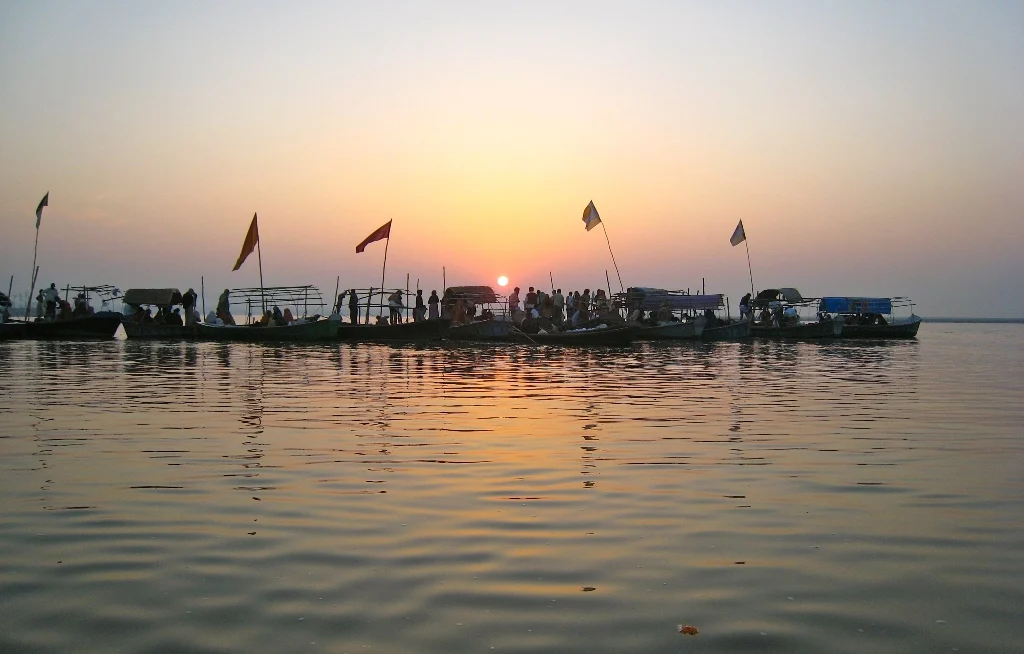
Triveni Sangam is the confluence of three rivers – the Ganga, Yamuna, and the mythical Saraswati – in Prayagraj (formerly Allahabad), Uttar Pradesh, India. It is a highly revered and spiritually significant place for Hindus, drawing pilgrims and tourists alike. The confluence is considered a Triveni Tirtha, where three rivers merge, symbolizing the confluence of three aspects of divinity.
Allahabad Fort: A Mughal Architectural Marvel
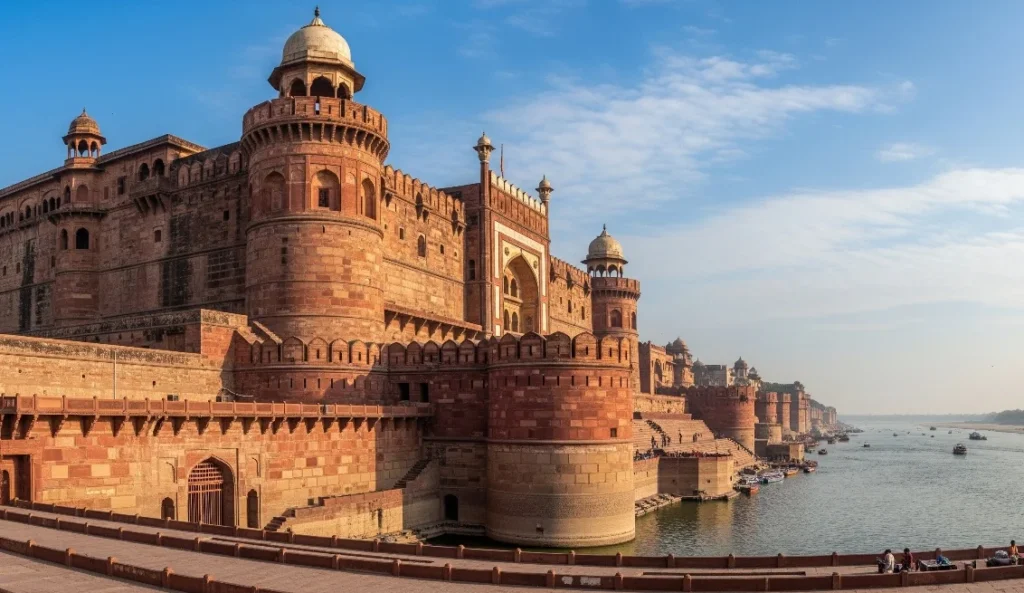
Allahabad Fort was built by the Mughal emperor Akbar at Allahabad in 1583. The fort stands on the banks of the Yamuna, near its confluence with the Ganges. It is classified by the Archaeological Survey of India as a monument of national importance.
Alopi Devi Temple: Another unique Shaktipeetha where no idol exists.
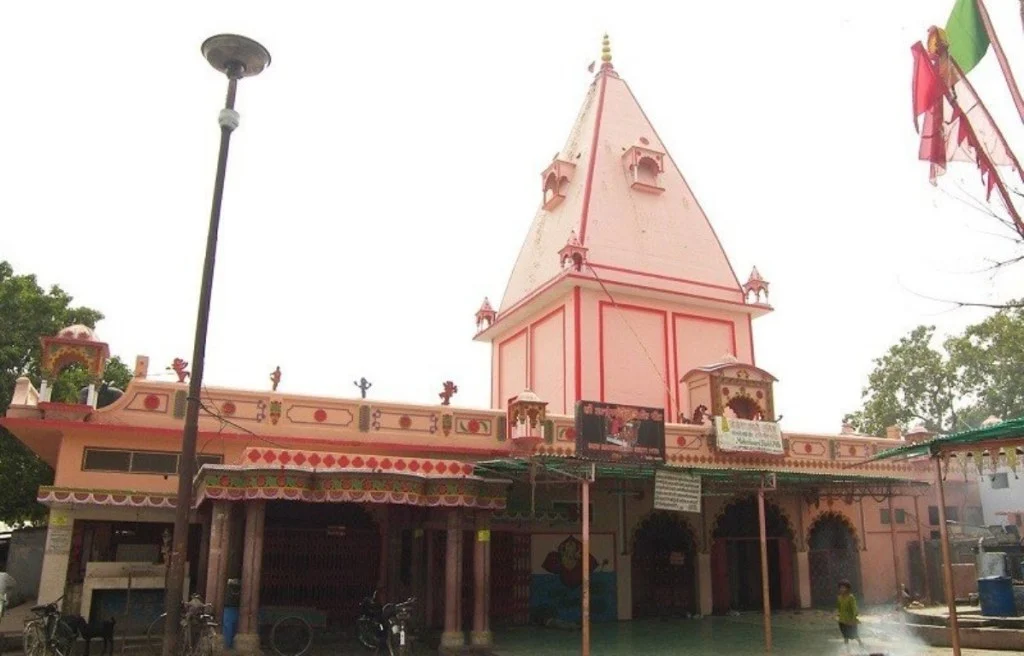
Alopi Devi Temple is a Hindu temple, situated in Alopibagh in Prayagraj in state of Uttar Pradesh, India. It is near to the holy Sangam, or confluence, where the rivers Ganges, Yamuna and the legendary Sarasvati meet. Kumbh Mela is near to this place. As per some historical evidences, the Maratha warrior Shreenath Mahadji Shinde had developed the Sangam place during his stay at Prayagraj in 1771–1772. Later in 1800s, Maharani Baizabai Scindia has done some works for renovation of Sangam ghats and temples at Prayagraj.
Khusro Bagh: Mughal garden tombs worth visiting for architecture lovers.
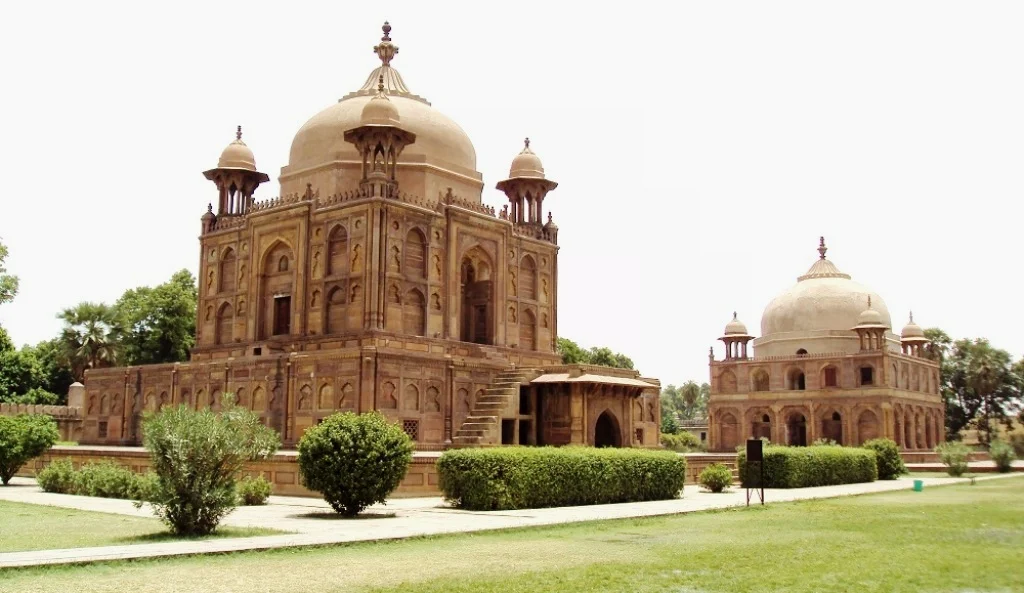
Khusro Bagh is a large walled garden and burial complex located in muhalla Khuldabad, close to the Prayagraj Junction railway station, in Prayagraj, India. It is roughly 6 km from the Akbar fort. The garden is situated over forty acres and shaped like a quadrangle. It is listed as an Indian Site of National Importance.
Anand Bhavan: The ancestral home of Nehru, a must-visit for history enthusiasts.
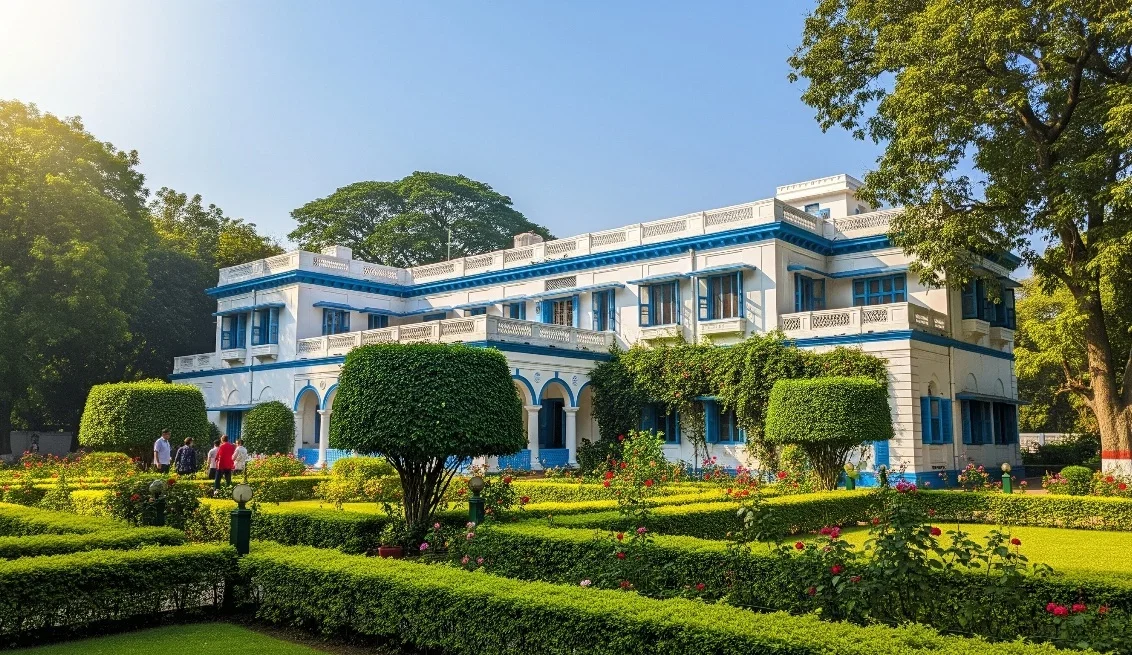
The Anand Bhavan is a historic house museum in Prayagraj, India, focusing on the Nehru family. It was bought by Indian political leader Motilal Nehru in the 1930s to serve as the residence of the Nehru family when the original mansion Swaraj Bhavan (previously called Anand Bhavan) was transformed into the local headquarters of the Indian National Congress.
Conclusion: A Temple That Speaks in Silence
Lalita Devi Temple, Prayagraj may not have the grandeur of Vaishno Devi or the crowd of Kamakhya, but what it offers is purity, peace, and power. It’s a temple where history whispers, mythology breathes, and the divine feminine reigns supreme.
If you’re someone seeking spiritual renewal, or just wish to explore an authentic, lesser-known Shaktipeetha, this temple deserves a place on your journey map. It transformed my understanding of devotion—from ritualistic to personal.
FAQs:
Temple Opening Time: 05:00 AM – 09:00 PM
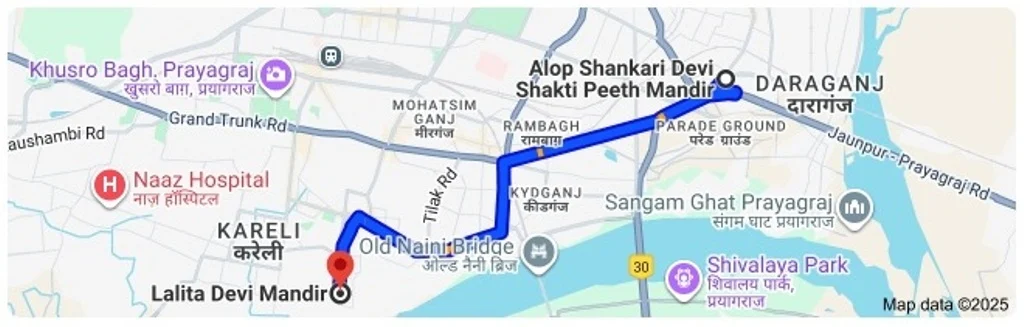
It is 33 min (8.7 km) via Purushottam Das Tandon Marg and 34 min (7.4 km) via Kamla Nehru Rd and Tilak Rd
According to ancient belief, Sati’s finger fell at Prayagraj.
It is 21 min (6.6 km) via Grand Trunk Rd/Varanasi – Prayagraj Rd / 23 min (7.5 km) via Mahatma Gandhi Marg / 28 min (8.7 km) via Mahatma Gandhi Marg and Noorullah Rd.