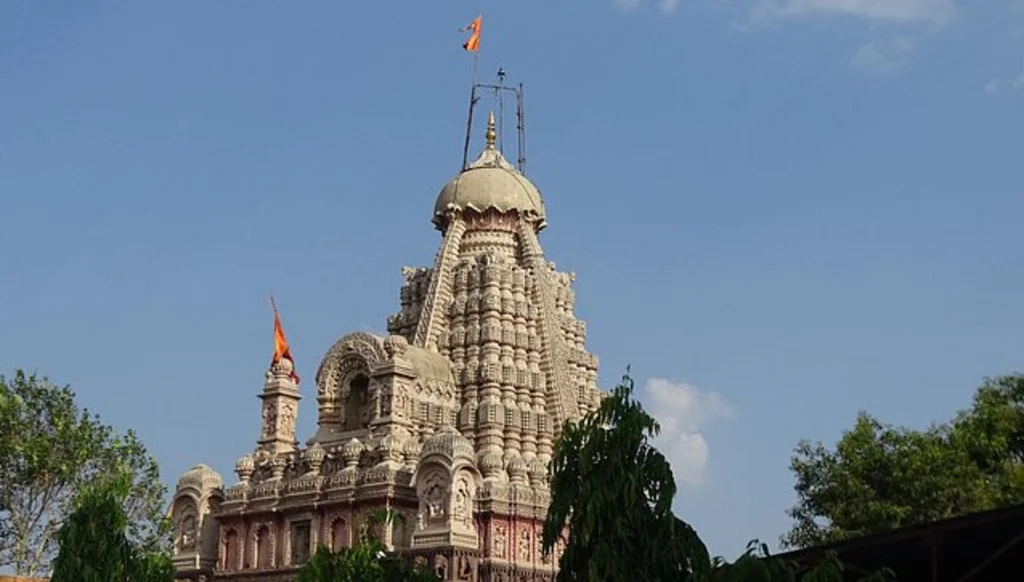

Grishneshwar Jyotirlinga, located near the magnificent Ellora Caves in Maharashtra, is such a sacred place which calls you. It is not just a pilgrimage site. It is a living symbol of faith, sacrifice, and divine grace.
This temple holds a special place among the twelve Jyotirlingas of Lord Shiva. Devotees believe it is the last Jyotirlinga in the sacred sequence. Because of this, its spiritual importance feels even deeper.
When you enter the temple complex, you immediately sense peace. The fragrance of incense fills the air. Priests chant “Om Namah Shivaya” with devotion. The ancient stone walls silently witness centuries of prayers. As a result, the atmosphere feels timeless and powerful.
However, the true strength of Grishneshwar Jyotirlinga lies in its legend. A story of a devoted woman, her unwavering faith, and Lord Shiva’s divine blessing gives this shrine its soul. Her devotion moved the Divine himself. Therefore, this temple stands as proof that sincere bhakti never goes unanswered.
In this article, we will explore the history, mythology, architecture, spiritual significance, and travel details of Grishneshwar Jyotirlinga. And perhaps, as you read, you may feel its quiet spiritual call.
Legends of Grishneshwar Jyotirlinga
A Brahmin named Sudharma lived near the Devgiri Mountain with his wife, Sudeha. Astrologers predicted that Sudeha would not bear a child. This news deeply saddened her. However, her desire to become a mother only grew stronger. Therefore, she urged Sudharma to marry her younger sister Ghushma so that the family could have a child.
Ghushma was a humble and virtuous woman. Every day, she carefully made one hundred and one earthen Shivalingas. Then she worshiped them with complete faith and deep devotion.
A few days later, Lord Shiva blessed her with a beautiful and healthy child. His divine grace filled their home with happiness. With the child’s birth, both Sudeha and Ghushma felt boundless joy.
After some time, dark thoughts slowly began to grow in Sudeha’s mind. She started to believe that Ghushma had taken everything from her. Meanwhile, Ghushma’s son continued to grow. In time, he became a young man and later got married.
Finally, one night, Sudeha committed a terrible act. While he was asleep, she killed Ghushma’s young son. Then she carried his body and threw it into the same pond where Ghushma immersed the earthen Shivalingas each day.
By morning, the shocking truth came to light, and everyone in the house learned what had happened. There was chaos in the whole house. But Ghushma remained engrossed in the worship of Shiva as usual as if nothing had happened.
Lord Shiva was deeply moved by her unwavering devotion. Therefore, he brought her son back to life and appeared before her in divine form.
When he offered her a boon, Ghushma did not ask for revenge. Instead, she prayed for Sudeha’s forgiveness. Touched by her compassion, Lord Shiva forgave Sudeha. He then chose to reside at that sacred place. From that moment, the site became a revered pilgrimage destination, now known as Grishneshwar Jyotirlinga.
Historical Journey of Grishneshwar Jyotirlinga Temple
Invaders destroyed the temple structure during the 13th and 14th centuries under the Delhi Sultanate. Over time, devotees rebuilt it several times. However, fresh conflicts during the Mughal–Maratha struggle led to repeated destruction.
In the 16th century, Maloji Bhosale, the grandfather of Shivaji, took the first major step to restore the shrine. Later, in 1729, Queen Ahilyabai Holkar sponsored its reconstruction. With her support, artisans rebuilt the temple in its present form after the decline of the Mughal Empire.
Architecture of Grishneshwar Jyotirlinga Temple
Grishneshwar Temple stands as one of the oldest and most revered temples in Sambhaji Nagar, Maharashtra. Devotees regard it as the last Jyotirlinga among the twelve sacred shrines of Lord Shiva. Therefore, it holds a unique spiritual importance in the Jyotirlinga tradition.
Moreover, this temple features a rare and remarkable carving. On the top of the shrine, artisans carved Shiva, Parvati, Ganesha, and Kartikeya seated together on Nandi. You can also see Goddess Ganga flowing from Lord Shiva’s forehead. Craftsmen created this beautiful sculpture in white stone, and visitors can clearly view it from the southern entrance of the temple.
One of the temple pillars displays a beautifully carved sculpture of an elephant alongside Nandi. Devotees consider this carving a symbol of the sacred Hari-Har union, which represents the meeting of Vishnu and Shiva. Therefore, the sculpture reflects harmony between two major forms of the Divine.
In addition, the temple stands on 24 magnificent pillars. Craftsmen decorated these pillars with horizontal carvings of Yakshas. These figures appear to carry the entire weight of the temple on their shoulders and backs. As a result, the architecture not only supports the structure but also conveys a powerful spiritual message of strength and devotion.
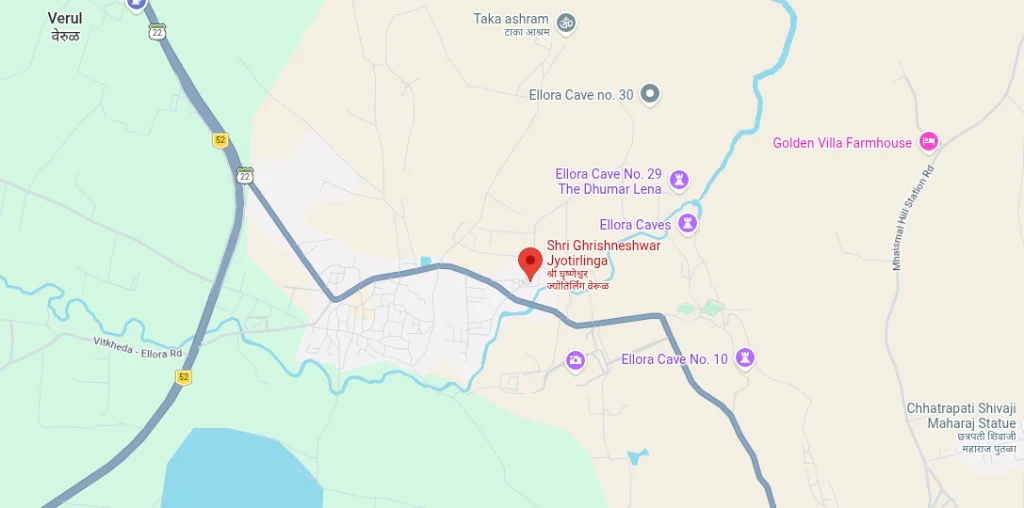
Grishneshwar Temple is a nationally protected monument located about 1.5 km from the famous Ellora Caves. Because of its historical and spiritual value, authorities carefully preserve this sacred site.
Builders constructed the temple using black stone, and the complex spreads across nearly 44,000 square feet. Skilled artisans carved the outer walls with detailed idols of gods and goddesses. As you walk around the temple, these sculptures immediately draw your attention.
Inside the temple, you will find the Garbhagriha, the innermost sanctum. From here, devotees can clearly see the sacred Shivling, which measures about 17 feet in length and 17 feet in width. Unlike many other Jyotirlinga temples, this shrine allows devotees to enter the Garbhagriha and offer prayers directly. Therefore, the experience feels deeply personal and spiritually powerful.
Geographical Location of Grishneshwar Jyotirlinga
Grishneshwar Jyotirlinga stands in Verul village, near the famous Ellora Caves, in the Aurangabad district of Maharashtra, India. The temple lies about 30 km from Aurangabad and around 11 km from Daulatabad Fort.
Devotees recognize it as the 12th and final Jyotirlinga of Shiva. Therefore, it holds a special place in the sacred Jyotirlinga pilgrimage circuit.
Here’s a quick overview:
| Aspect | Details |
|---|---|
| Coordinates | 20°1′29.9″N, 75°10′11.7″E |
| State | Maharashtra, India. |
| Village / District | Verul / Aurangabad |
| Elevation | ~ 934 meters (3064 feet) above sea level. |
How to Reach Grishneshwar Jyotirlinga Temple
- By Air: The nearest airport is Chhatrapati Sambhaji Nagar Airport, also known as Aurangabad Airport. From the airport, you can hire a taxi or cab to reach Ellora or Verul village. The drive to Grishneshwar Jyotirlinga covers about 30 km and usually takes around 45 minutes, depending on traffic.
- Railway: The nearest railway station is Aurangabad Railway Station, located about 30 km from Grishneshwar Jyotirlinga. It is well connected to major cities in Maharashtra and nearby states. Another option is Daulatabad Railway Station, which is around 15 km away. However, only limited trains stop here. From either station, you can easily find local taxis, auto-rickshaws, and buses to reach the temple.
- By Road: The temple enjoys excellent road connectivity, so devotees can travel comfortably from nearby cities.
- Aurangabad to Grishneshwar – 30 km
You can hire local taxis, auto-rickshaws, or board buses from the city. - Shirdi to Grishneshwar – 130 km
Many pilgrims combine their visit with Shirdi Sai Baba Temple. - Mumbai to Grishneshwar – 350 km
The journey takes around 7–8 hours by road, depending on traffic.
- Aurangabad to Grishneshwar – 30 km
State transport buses, private taxis, and personal vehicles can easily reach the temple. Moreover, the world-famous Ellora Caves stand right beside the shrine. Therefore, visitors often explore both destinations on the same trip.
Best Time to Visit Grishneshwar Temple
Choosing the right time to visit Grishneshwar Jyotirlinga can make your pilgrimage more peaceful and comfortable. Weather, crowd levels, and festivals all influence the experience. The table below will help you plan better:
| Season | Months | Weather Conditions | Crowd Level | Why You Should Visit |
|---|---|---|---|---|
| Winter | October to February | Cool and pleasant (10°C – 25°C) | Moderate | Best time for comfortable darshan and sightseeing. Ideal for senior devotees. |
| Summer | March to June | Hot and dry (30°C – 40°C) | Low to Moderate | Fewer crowds, but afternoon heat can be intense. Early morning visits are better. |
| Monsoon | July to September | Moderate rainfall, pleasant greenery | Moderate | Surroundings near Ellora Caves look beautiful. Roads may be slippery during heavy rain. |
| Shravan Month | July–August (Hindu calendar) | Varies (often monsoon) | Very High | Spiritually powerful month dedicated to Shiva. Expect long queues and festive atmosphere. |
| Mahashivratri | February/March | Pleasant | Extremely High | Grand celebrations, special rituals, and night-long worship make it deeply divine but crowded. |
Recommended Time
Winter months (October to February) offer the most comfortable weather for temple visits and nearby sightseeing. However, if you seek a deeply devotional atmosphere, plan your visit during Shravan or Mahashivratri.
Stay options near Grishneshwar Jyotirlinga
Several comfortable stay options exist near Grishneshwar Jyotirlinga in Ellora, Maharashtra, including resorts, hotels, and pilgrim lodges within 0.3-1 km.
Top Hotels
Popular choices feature good ratings and convenient locations close to the temple and Ellora Caves.
| Hotel/Resort | Distance | Rating | Key Features |
|---|---|---|---|
| Ellora Heritage Resort | 0.5 km | 4.2 (1671 reviews) | Garden, restaurant, bike rentals; countryside setting. |
| Hotel Great Annapurna | Nearby (Khuldabad) | 4.1 (1773 reviews) | Kids’ playground, airy restaurant. |
| Hotel Kailas | Opposite Ellora Caves | 3.9 (1368 reviews) | Open-air dining, playground, cave views. |
| HOTEL MADHUBAN | 3 km from caves | 4.5 (102 reviews) | Simple, well-rated lodging. |
| Sairam Residency | 500m from temple | 4.7 (9 reviews) | Basic lodge for pilgrims. |
| Shivam Residency | 0.3 km | 3.7 (7 reviews) | Near Ganesh Temple; comfortable rooms. |
Pilgrim Niwas Options
Budget-friendly dharamshalas cater to devotees, often with AC/non-AC rooms and meals starting at ₹799.
- Jagadguru Bhakt Niwas: 190-500m away; 4-bed rooms, parking, meals included.
- Om Siddheshwar Bhakta Niwas: 500m; family-friendly with basic amenities.
Book via sites like YatraDham or TripAdvisor for deals; check availability as options fill quickly near the temple.
Grisneshwar Jyotirlinga Temple Timings
Grishneshwar Jyotirlinga Temple near Ellora Caves typically opens early for darshan and closes late in the evening.
Daily Timings
Standard hours run from 5:30 AM to 9:30 PM, with possible afternoon breaks from around 12 PM to 4 PM on some days.
- Darshan: 5:30 AM–12 PM and 4 PM–9:30 PM.
- During Shravan month: Extended to 3 AM–11 PM or similar long hours.
Aarti Schedule
Aartis occur multiple times daily, varying slightly by season (summer/winter).
| Aarti Type | Summer Timing | Winter Timing |
|---|---|---|
| Mangal Aarti | 4:00 AM | 4:00 AM |
| Jalhari Saghan | 8:00 AM | 8:00 AM |
| Maha Prasad | 12:00 PM | 12:00 PM |
| Evening Aarti | 7:30 PM | 5:40 PM |
| Night Aarti | 10:00 PM | 10:00 PM |
Abhishek timings are 6 AM–11 AM and 1 PM–7 PM; expect longer waits during festivals like Mahashivratri. Verify on-site as timings can shift for crowds or events.
Nearby Attractions of Grishneshwar Jyotirlinga Temple
Ellora Caves
The Ellora Caves, located in Maharashtra, India, form a UNESCO World Heritage Site known for their extraordinary rock-cut architecture. It is nearly 2 km away from Grishneshwar Jyotirlinga Temple. Craftsmen carved 34 monumental temples and monasteries into solid basalt cliffs between the 6th and 10th centuries.
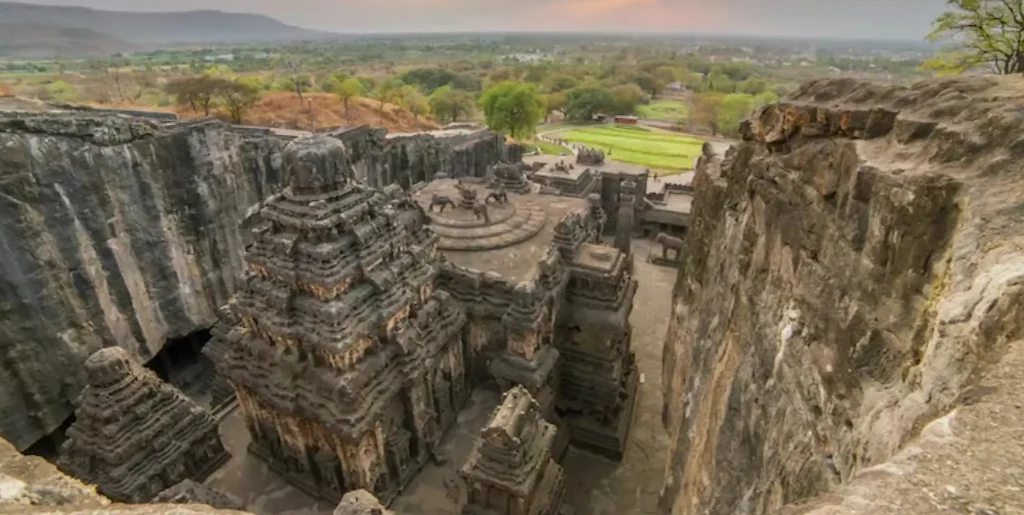
The complex beautifully represents the Buddhist, Hindu, and Jain traditions. Among all the caves, the magnificent Kailasa Temple (Cave 16) stands out as the highlight. It is the world’s largest monolithic structure, carved from a single rock.
Bhadra Maruti Temple
The Bhadra Maruti Temple is a revered Hindu temple located in Khuldabad, Maharashtra. The temple is dedicated to Hanuman and lies about 4 km from the famous Ellora Caves.
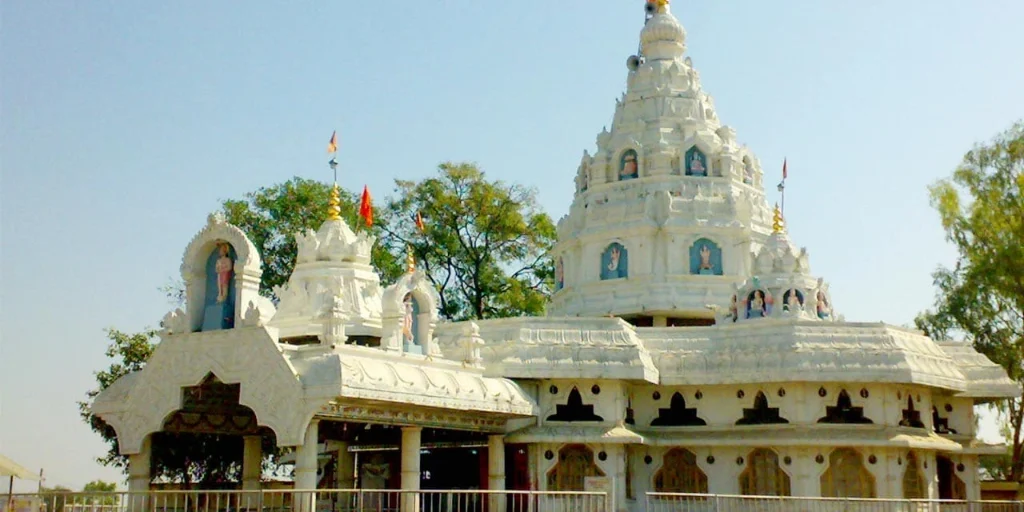
What makes this temple truly unique is the posture of the deity. Here, Lord Hanuman appears in a rare reclining or sleeping position, which is uncommon in most Hanuman temples across India. Therefore, many devotees visit this shrine to witness this special and peaceful form of the Lord.
Daulatabad Fort
The Daulatabad Fort, originally known as Devagiri Fort, is a historic fortified citadel located in Daulatabad village near Aurangabad, Maharashtra. The fort stands on a massive conical hill and reflects remarkable medieval military architecture.
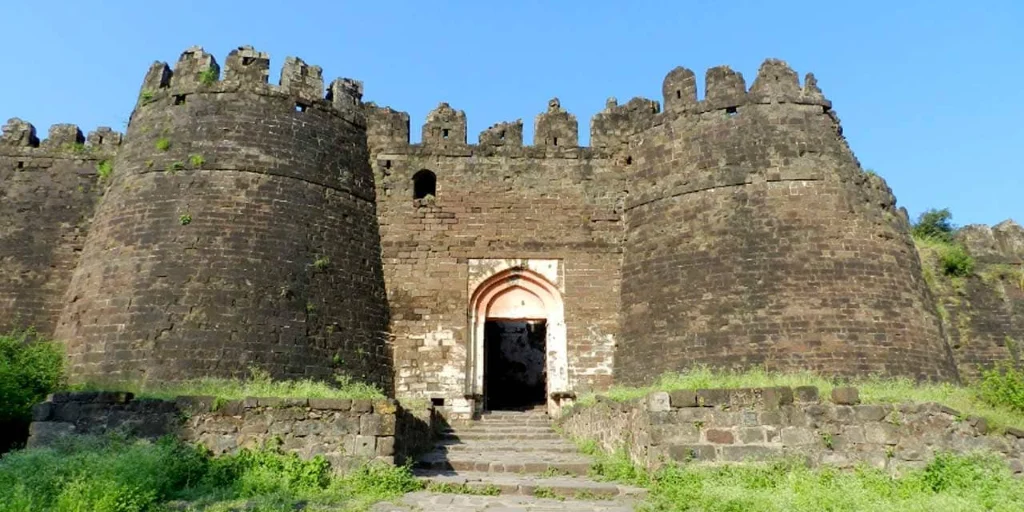
It once served as the capital of the Yadava dynasty. Later, Muhammad bin Tughlaq shifted the capital of the Delhi Sultanate here for a brief period. In subsequent years, the fort functioned as a secondary capital of the Ahmadnagar Sultanate.
Because of its strategic design, strong defense system, and rich political history, Daulatabad Fort remains one of the most impressive hill forts in India.
Aurangabad Caves
The Aurangabad Caves consist of twelve rock-cut Buddhist shrines carved into a hill that stretches from east to west, close to the city of Aurangabad, Maharashtra. These caves reflect the rich artistic and spiritual heritage of early Buddhism in the region.
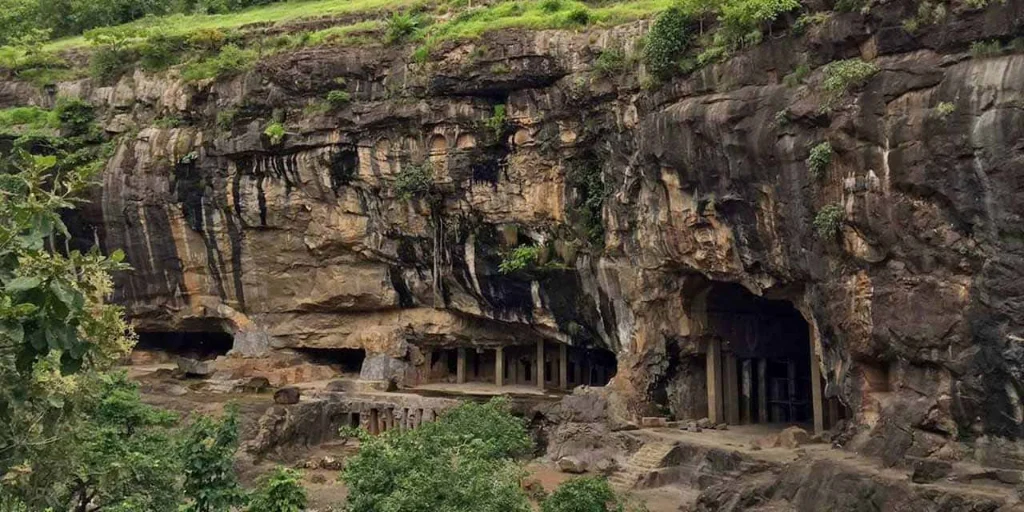
Interestingly, the earliest known reference to the Aurangabad Caves appears in the great chaitya hall of the Kanheri Caves. This connection highlights the historical links between major Buddhist cave complexes across Maharashtra.
Chhatrapati Shivaji Maharaj Vastu Sangrahalaya
The Chhatrapati Shivaji Maharaj Vastu Sangrahalaya (CSMVS), formerly known as the Prince of Wales Museum, stands as a premier Grade I heritage museum in South Mumbai, near the iconic Gateway of India.
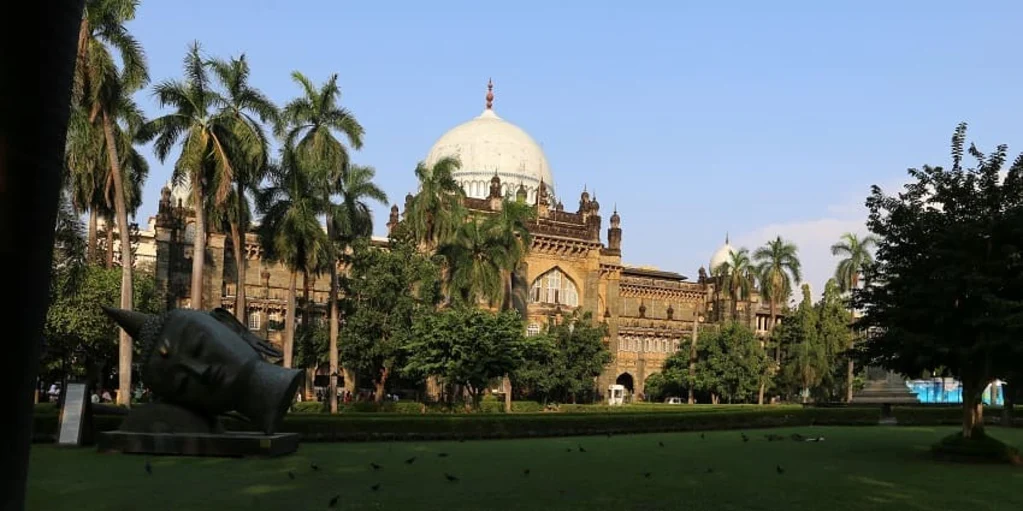
Established in 1922, the museum preserves more than 60,000 artifacts that span art, archaeology, and natural history. The building itself is a masterpiece of Indo-Saracenic architecture, blending Indian and colonial design elements in a grand and elegant style.
Jain Temple at Ellora
The Jain temples at Ellora Caves (Caves 30–34) stand at the northern end of the complex. Artisans carved these rock-cut shrines during the 9th and 10th centuries. They beautifully reflect the art and philosophy of the Digambara sect of Jainism.
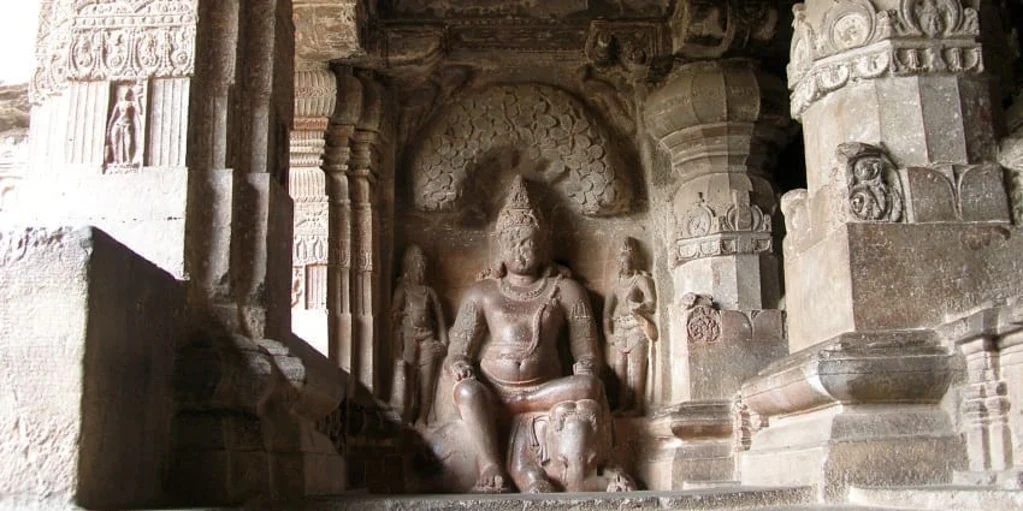
These caves display detailed carvings of Tirthankaras and Yakshas, with remarkable precision and grace. Among the highlights are Chhota Kailasa (Cave 30) and the grand, multi-storied Indra Sabha (Cave 32). Indra Sabha, in particular, impresses visitors with its elaborate pillars, intricate sculptures, and balanced architectural design.
Conclusion: A Shrine Where Faith Lives Forever
Some pilgrimages end when you leave the temple gates. However, a visit to Grishneshwar Jyotirlinga stays with you long after you return home.
This sacred shrine is not only the twelfth Jyotirlinga of Shiva. It is a living symbol of devotion that overcame jealousy, pain, and loss. The story of Ghushma teaches us a timeless truth. True faith does not demand revenge. Instead, it chooses forgiveness. Because of that devotion, Lord Shiva himself chose to reside here.
Moreover, the temple’s powerful architecture, its rare carvings, and its closeness to the magnificent Ellora Caves make the experience even more special. Here, history and spirituality stand side by side. Every stone seems to whisper stories from centuries past.
If you are planning your Jyotirlinga journey, do not miss this sacred site. Walk through its ancient corridors. Offer your prayers in the Garbhagriha. Sit quietly for a few moments. You may feel a calm strength rising within you.
In the end, Grishneshwar Jyotirlinga reminds us that sincere devotion never goes unanswered. And perhaps, like Ghushma, we too can learn that faith, when pure, has the power to bring the Divine closer than we ever imagine.
If this guide helped you, explore more sacred journeys on templesofindia.space and continue your path of spiritual discovery. 🙏
Frequently Asked Questions (FAQs)
It is about 30-35 km from Aurangabad city (now Chhatrapati Sambhajinagar), which has the nearest airport and railway station.
It is very close, only about 0.5 km away, making it easy to visit both on the same day.
No, standard entry to the temple is free.
October to February (winter) is best for pleasant weather. Avoid summer (April-June) due to high temperatures.
Yes, direct touching (Sparsh Darshan) of the Shiva Linga is allowed, which is rare for many Jyotirlingas.
Yes. Men must remove shirts and vests (go bare-chested) to enter the inner sanctum. Women should wear traditional/ modest Indian attire.
Yes, Rudrabhishek and other pujas can be booked, with general Abhishek possible in the morning. Official Link.