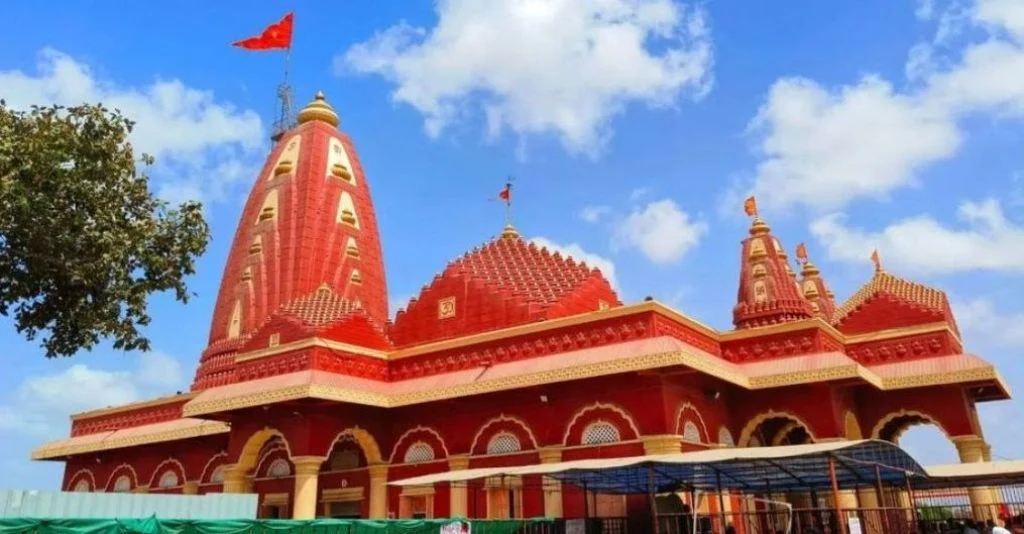


When faith faces fear, devotees seek the shelter of Lord Shiva, the eternal protector. Near the sacred land of Dwarka, Nageshwar Jyotirlinga rises as a powerful symbol of divine strength and devotion. Devotees worship it as one of the 12 Jyotirlingas of Lord Shiva and believe that the temple protects them from negativity, fear, and unseen dangers. Sacred chants of Om Namah Shivaya fill the temple complex and create a deeply spiritual atmosphere.
Nageshwar Jyotirlinga represents more than a place of worship. Ancient legends, sacred scriptures, and centuries of devotion give the temple its deep spiritual meaning. Here, Lord Shiva appears as the guardian of righteousness and inner courage. In this blog, you will discover the history of Nageshwar Jyotirlinga. You will learn its mythology and deep spiritual significance. The blog also covers the darshan experience and important travel details. Together, these aspects explain why millions of devotees hold Nageshwar Jyotirlinga close to their hearts.
Pillar of Light & Divine Tales
According to the Shiva Purana, once Brahma, the god of creation, and Vishnu, the god of preservation, argued about who was greater. To settle this, Lord Shiva appeared as a huge, endless pillar of light, called the jyotirlinga, which stretched across the three worlds. Brahma went upward on a swan to find the top, while Vishnu went downward, taking the form of a boar, to find the bottom.

Vishnu honestly admitted he could not find the end of the light, but Brahma lied, saying he had reached the top and even showed a ketaki flower as false proof. Shiva became angry at Brahma’s dishonesty and cursed him so that he would never be worshipped, while Vishnu would be worshipped forever for his truthfulness. The jyotirlinga temples are believed to be the places where Shiva appeared as this infinite column of light.
Each of the 12 Jyotirlinga temples marks a point where Shiva chose to appear. The tradition highlights both his boundless power and his intimate presence across the land.
Myth Behind Nageshwar Jyotirlinga
Legends from the Shiva Purana
A demon named Daruka who, empowered by his wife Daruki, terrorized devotees in Darukavana forest and imprisoned Shiva bhakta Supriya. Supriya showed unwavering devotion. He chanted “Om Namah Shivaya” with deep faith. He wore rudraksha and bhasma. His devotion summoned Lord Shiva. Shiva vanquished the demon and manifested as the Nageshwar Jyotirlinga.
Pandavas Legend
According to local traditions and legends, the Pandavas traveled through many forests during their twelve years of exile and one year of incognito life described in the Mahabharata. One of these regions was Darukavana, where the following myth is believed to have taken place.
A cow named Kapila, belonging to the Pandavas, regularly visited a nearby lake or river and mysteriously released milk into the water.
When the cowherd witnessed this miraculous event, he reported it to Dharmaraja Yudhishthira, the eldest of the Pandavas. Yudhishthira then sent Bhima, the strongest brother, to investigate further.
The Pandavas decided to drain the lake to uncover the mystery. Bhima struck the lake three times with his mace. From the depths, a brilliant light appeared, revealing a self-manifested (swayambhu) Shiva Lingam.
Lord Shiva is believed to have appeared before the Pandavas at that moment. Later, Lord Krishna told them that the self-manifested stone was the Nageshwar Jyotirlinga. In some traditions, Yudhishthira is credited with establishing the original temple at this sacred spot.
Historical Journey of Nageshwar Jyotirlinga Temple
Archaeological evidence at the Nageshwar Jyotirlinga Temple near Dwarka remains limited. Excavations have revealed earlier foundations and fragments that suggest continuous worship over many centuries. Inscriptions and historical grants link the temple’s history mainly to medieval dynasties rather than exact ancient dates. While no major ASI excavations are formally recorded for the present site, the temple forms an important part of Gujarat’s broader Shaivite heritage.
Key Archaeological Finds
- Excavations uncovered foundations and architectural fragments of earlier temples. These remains show that religious worship existed at the site centuries before the present structure.
- These finds match the challenges of sandy coastal soil in Gujarat. Builders likely used traditional stabilization methods such as rammed earth mixed with lime. Modern reconstructions later added piling for extra support.
- The site reflects Maru Gurjara and Nagara architectural styles. Older layers show trabeated construction with stone columns and corbelled shikharas.
Historical Timeline
- Before the 12th century CE, the site may have originated in the Mahabharata era or early Shaivite worship. It follows the swayambhu linga tradition and finds mention as a Jyotirlinga in the Skanda Purana.
- From the 9th to the 13th century CE during the Solanki period, the core temple architecture developed under the patronage of the Chalukyas, Rashtrakutas, and Yadavas. Historical grants, such as support for temple lamp wicks, are also recorded.
- In the 14th century CE, Alauddin Khilji’s invasions led to the destruction of the temple.
- In the 18th century CE, Maratha leaders such as Ranoji Shinde or Ahilyadevi Holkar partially rebuilt the temple.
- In 1965 during the 20th century, Dinshahji Petit led the construction of the modern temple, including a large Shiva statue. In recent years, the Inheritage Foundation has carried out digital documentation of the site.
Architecture of Nageshwar Jyotirlinga Temple
Nageshwar Jyotirlinga Temple follows traditional Hindu architecture with clear Gujarati influences. The temple features detailed carvings, domes, and spires. Its most unique element is the underground sanctum that houses the self-manifested Shivling made from Dwaraka Shila stone. The Shivling resembles a Tri-Mukhi Rudraksha and faces south, while the temple itself faces east, creating a distinct spiritual atmosphere.
A large statue of Lord Shiva stands outside the temple as a guardian figure. Together, the ancient craftsmanship and deep devotion give the temple a powerful presence. Pilgrims visit Nageshwar Jyotirlinga seeking protection, strength, and spiritual peace.
Key Architectural Features
- Underground Sanctum (Garbhagriha) : The Jyotirlinga lies in an underground chamber, a rare feature among the Jyotirlingas that highlights its deep spiritual power.
- Sacred Lingam : Carved from rare Dwarka Shila stone, it takes the form of a Tri-Mukhi Rudraksha with small chakra-like markings that symbolize divine protection. The lingam faces south, while the main temple entrance faces east, an alignment that holds deep mythological significance.
- Shikhara (Tower) : The tall spire above the sanctum features an elegant design and reflects the classic Hindu temple architecture of the region.
- Artistic Details : The temple complex boasts intricate carvings of deities, mythical stories, and artistic motifs on its walls and gates, showcasing skilled craftsmanship.
- Modern Additions : A prominent seated statue of Lord Shiva, rising about 25 meters tall, stands as a major modern attraction and adds to the temple’s grandeur.
Among the twelve Jyotirlingas, only two are made of sand. One is at Rameshwaram, and the other is the Nageshwar Jyotirlinga.
Geographical Location of Nageshwar Jyotirlinga
Nageshwar Jyotirlinga stands on the coast of the Saurashtra region in Dwarka, Gujarat. It lies in the Devbhumi Dwarka district, between Gomti Dwarka and Beyt Dwarka Island. The temple is located near the village of Nageshwar.
Here’s a quick overview:
| Aspect | Details |
|---|---|
| Coordinates | 22.3359°N, 69.0869°E |
| State | Gujarat, India. |
| District | Devbhumi Dwarka |
| Elevation | ~At sea level |
How to Reach Nageshwar Jyotirlinga Temple

To visit Nageshwar Jyotirlinga near Dwarka in Gujarat, you can fly to Jamnagar or Porbandar and then travel by taxi or bus to Dwarka. If you prefer train travel, reach Dwarka Railway Station. From Dwarka, the temple is about fifteen to eighteen kilometres away and can be reached by taxi, auto, or local bus by following the road toward Beyt Dwarka.
By Air
The nearest airports for most travellers are Porbandar and Jamnagar. Porbandar is the closest small airport, while Jamnagar is larger and offers more flight options. From either airport, travellers can reach Nageshwar Jyotirlinga by road.
After landing, you can hire a taxi or take a bus to Dwarka. From Dwarka, local taxis and buses run to Nageshwar Mahadev Temple, which is about fifteen to eighteen kilometres away.
By Train
The nearest major railway stations are Dwarka and Okha, as many long-distance trains stop at Dwarka. The Nageshwar Jyotirlinga Temple lies a short drive from Dwarka station.
From the station, you can take an auto, taxi, or local bus to reach the temple. The road journey is short and comfortable.
By Road
You can reach Dwarka by car or bus using the highway. From Dwarka, follow the road toward Beyt Dwarka or Bet Dwarka. Nageshwar lies along this coastal route. The drive from Dwarka city takes about fifteen to eighteen kilometres.
State-run and private buses operate regular services to Dwarka from major cities in Gujarat. After reaching Dwarka, you can hire a local taxi or auto to reach the temple. Many pilgrims prefer taxis for a more comfortable journey.
Best Time to Visit Nageshwar Jyotirlinga
| Season | Months | Weather | Why visit now |
| Winter (best) | Oct – Feb / Mar | Cool days, cool nights. Nice breeze. | Very good weather for darshan and travel. Good for photo and calm walks. |
| Post-monsoon / Early Spring | Mar – Apr | Mild and pleasant early; warms later. | Less crowd than winter and still nice weather. |
| Summer (hot) | Apr – Jun | Hot and sunny. Can be tiring. | Fewer crowds and cheaper travel. Not good for long walks. |
| Monsoon | Jul – Sep | Some rain and humidity | Shravan month and Sawan Shivratri draw many devotees despite rain. Good for festival feel. |
Stay options near Nageshwar Jyotirlinga Temple

For staying near Nageshwar Jyotirlinga, between Dwarka town and Shivrajpur, hotels in Dwarka and nearby resorts offer the most practical options. Visitors can choose from simple business-style hotels to full-service resorts, depending on comfort and budget.
The Sky Comfort Hotel Mahi (Nageshwar Road)
The hotel is located directly on Nageshwar Road in Daarukavanam, making it very convenient for multiple darshans at Nageshwar and visits to Dwarkadhish. It is a mid-range hotel with modern rooms and suits travellers who want comfort with air conditioning and Wi-Fi without paying resort prices.
Lemon Tree Premier, Dwarka
The hotel stands on Nageshwar Road near the ISKCON Gate in Dwarka, offering easy road access to both Dwarkadhish Temple and Nageshwar Jyotirlinga. It is a branded property with comfortable rooms, a vegetarian restaurant, and facilities like a pool and spa. This stay suits travellers who prefer a reliable, business-style hotel while focusing on temple visits.
The Reef Resort, Shivrajpur
The resort is located near Shivrajpur Beach and the Lachchhigadh Lighthouse, making it ideal for combining a visit to Nageshwar with time at the Blue Flag beach. It is a smaller, well-rated property and is best for travellers who prefer a quieter, nature- and beach-focused stay rather than staying in the busy temple town.
Rituals and Daily Puja Schedule at Nageshwar Temple
- Temple opens – 05:30 AM.
- Mangal Aarti / Morning Aarti – 05:00 AM to 05:30 AM.
- Morning Darshan – 06:00 AM to 12:30 PM.
- Maha Bhog / Midday Aarti – 12:00 PM to 12:30 PM.
- Madhya Snana / Mid-afternoon – 04:00 PM to 04:30 PM.
- Evening Darshan – 05:00 PM to 09:00 PM.
- Shayan Aarti / Night Aarti – 08:30 PM to 09:00 PM.
- Temple closes – 09:00 PM to 09:30 PM.
Places of attraction near Nageshwar Jyotirlinga Temple
Dwarkadhish Temple
Dwarka is recognized as one of the Char Dham pilgrimage sites. People visit this place for the evening aarti and for quiet prayers. It is nearly 16 km and easy to reach from Nageshwar Jyotirlinga by car. The Dwarkadhish Temple, also known as Jagat Mandir, is an outstanding specimen of Chaulukya style architecture – a blend of sculptural grandeur and spiritual symbolism.
Beyt (Bet) Dwarka
It is a small island with immense mythological and spiritual significance. Distance nearly 30 km from Dwarka and accessible via a short boat ride from Okha Port. According to Hindu belief, this was the original residence of Lord Krishna, where he lived with his family and received guests, including Sudama, his childhood friend.
Rukmini Devi Temple
Located about 2 km from the main Dwarkadhish Temple, the Rukmini Devi Temple is dedicated to Rukmini, the chief consort of Lord Krishna. Though small and often less crowded than the main temple, it holds deep spiritual and cultural importance.
Gomti Ghat
Gomti Ghat, located just beside the revered Dwarkadhish Temple, is where the sacred Gomti River meets the Arabian Sea. Considered one of the most divine ghats in India, this spot is believed to cleanse sins and bless devotees with spiritual merit.
Conclusion
Nageshwar Jyotirlinga is more than a sacred shrine; it is a place where faith, history, and deep inner peace come together. From ancient legends linked to the Mahabharata to the calm coastal setting near Dwarka, every part of this temple reflects the enduring presence of Lord Shiva. The simple yet powerful form of the Jyotirlinga, the rhythmic chants during aarti, and the quiet moments of prayer leave a lasting impression on every devotee.
Frequently Asked Questions (FAQs)
The temple opens at 5:30am and closes at 9:00pm.
Nageshwar Jyotirlinga resides in an underground sanctum. The path leading to it is narrow, measuring about two by two feet, and only one route allows access to the sanctum for darshan. Because of this limited passage, devotees often feel that darshan here takes time and requires patience.
Yes, devotees can perform darshan, worship, and abhishek by personally touching the Jyotirlinga. Be prepared for crowds and the temple’s rules, including dress code for men.
Photography inside the main temple premises is generally not allowed to maintain the sanctity of the site and avoid disturbance during worship. Visitors may, however, take photographs outside the temple and within the surrounding complex.