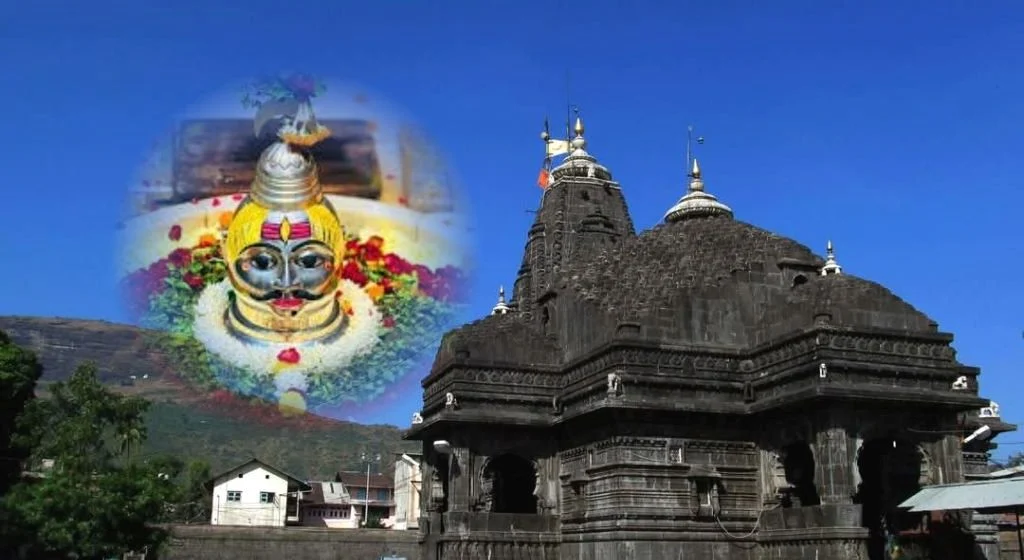


Trimbakeshwar Jyotirlinga stands in the sacred Brahmagiri hills near Nashik. It is not just a temple. It is a powerful spiritual center where faith comes alive. Unlike other Jyotirlingas, this holy shrine holds a rare Shivling that represents Brahma, Vishnu, and Mahesh in one form. Because of this unique belief, devotees see Trimbakeshwar as a place of complete divine balance.
Moreover, Trimbakeshwar Jyotirlinga connects deeply with ancient Hindu legends. The holy River Godavari begins its sacred journey here. As a result, pilgrims believe that darshan at this temple washes away past karmas. It also brings peace, clarity, and spiritual strength. Even today, saints, seekers, and devotees visit this sacred place with deep faith and devotion.
In this guide, you will learn about the history, mythology, rituals, darshan tips, and travel details of Trimbakeshwar Jyotirlinga. Therefore, if you seek spiritual depth and divine grace, this sacred Jyotirlinga deserves a place on your pilgrimage path.
Pillars of Light & Divine Tales
According to the Shiva Purana, once Brahma, the god of creation, and Vishnu, the god of preservation, argued about who was greater. To settle this, Lord Shiva appeared as a huge, endless pillar of light, called the jyotirlinga, which stretched across the three worlds. Brahma went upward on a swan to find the top, while Vishnu went downward, taking the form of a boar, to find the bottom.

Vishnu honestly admitted he could not find the end of the light, but Brahma lied, saying he had reached the top and even showed a ketaki flower as false proof. Shiva became angry at Brahma’s dishonesty and cursed him so that he would never be worshipped, while Vishnu would be worshipped forever for his truthfulness. The jyotirlinga temples are believed to be the places where Shiva appeared as this infinite column of light.
Each of the 12 Jyotirlinga temples marks a point where Shiva chose to appear. The tradition highlights both his boundless power and his intimate presence across the land.
Myth Behind Trimbakeshwar Jyotirlinga
The legend of Trimbakeshwar Jyotirlinga begins with Sage Gautama. He lived a life of deep penance and purity. However, fate tested him when he accidentally killed a cow. As a result, he sought divine forgiveness. Therefore, he prayed intensely to bring the sacred Ganga to earth.
Lord Shiva answered his devotion. He allowed the holy river to flow here as the Godavari. Moreover, Shiva manifested at this sacred spot as Trimbakeshwar Jyotirlinga. Because of this divine act, the place became eternally holy. It also marked the sacred origin of the Godavari River.
The sacred Kushavarta Kund, located inside the Trimbakeshwar Jyotirlinga temple complex, marks the origin of the Godavari River. This holy kund exists because of this divine event.
The Trimbakeshwar Jyotirlinga holds a rare spiritual form. Unlike other shrines, the lingam here represents Brahma, Vishnu, and Shiva together. Thus, it symbolizes creation, preservation, and destruction in one divine presence.
Connection to Lord Vishnu and Lord Shiva
Another legend explains the divine birth of the Godavari. Lord Vishnu appeared as Trivikram, the Vamana avatar. He pressed the earth with his foot. As a result, sacred water flowed out. Over time, this water took the form of the Godavari River. Some traditions even say the river emerged from the feet of Lord Vishnu.
Meanwhile, Lord Shiva also plays a key role in this sacred story. Pleased with the intense penance of Sage Gautama, he allowed the holy Ganga to descend from the heavens. It then flowed on earth as the Godavari. Therefore, the river carries the blessings of both Vishnu and Shiva, making it deeply sacred for devotees.
Historical Journey of Trimbakeshwar Jyotirlinga Temple
The present Trimbakeshwar Jyotirlinga temple was built by Peshwa Balaji Bajirao between 1740 and 1760 on the site of an older shrine. Moreover, Sant Nivruttinath, elder brother of Sant Dnyaneshwar, attained Samadhi at Trimbakeshwar, adding deep spiritual significance to the temple.
In 1742, the Marathas captured the fort from the Nizam. Later, in 1818, the British took control. Today, the fort remains under the Government of India.
At present, visitors can climb the fort from the northern side. A staircase of 400 steps leads to the top. Lalchand Sheth, a benevolent donor from Karachi, funded this construction.
On Friday, 16 February 1756, the sacred day of Mahashivaratri, divine music filled Shree Trimbakeshwar. The air echoed with the melodious sounds of sanai (shehnai) and chaughada. Moreover, bheri, tutari (trumpet), and ranashing (clarion) joined in. Together, these holy instruments created a powerful and festive spiritual atmosphere.
In 1954, the Sansthan was registered under the Public Trust Registration Act. After this, Shri Hanumant Narayan Jogalekar resigned from the inherited trusteeship. He then appointed Shri Prabhakar Ramchandra Gokhale as trustee. Shri Gokhale served as the sole trustee until 1995.
From 1995, a Board of Trustees came into existence. An honourable judge, appointed by the District Judge, serves as the Chairman. Meanwhile, the CEO of Trimbak Municipality works as the Secretary of the Board.
Architecture of Trimbakeshwar Jyotirlinga Temple
The Trimbakeshwar Jyotirlinga Temple in Nashik reflects a fine blend of Nagara and Hemadpanthi architecture. Builders used black basalt stone, which gives the temple its strong and timeless form. Peshwa Balaji Baji Rao (Nanasaheb Peshwa) commissioned the present structure between 1755 and 1786. He rebuilt it after earlier shrines were destroyed over time, including during Mughal invasions.
Moreover, the temple design carries deep spiritual meaning. The three-faced Jyotirlinga stands as its most unique feature. Intricate carvings across the temple walls also depict Hindu cosmology. Together, these elements make Trimbakeshwar Jyotirlinga both an architectural marvel and a powerful spiritual center.
Sanctum and Jyotirlinga
The garbhagriha of Trimbakeshwar Jyotirlinga appears square from the inside. However, it takes a star-shaped form on the outside. Inside, it houses the sacred Tryambaka Jyotirlinga. This form appears as a depression in the floor. It has three faces, symbolizing Brahma, Vishnu, and Shiva. Moreover, holy water flows from it continuously.
Above the sanctum rises a graceful shikhara. A large amalaka crowns it. A golden kalasha sits on top. Together, they represent Mount Meru. Every day, priests adorn the linga with a silver mask. On festivals, they place a five-faced golden mask with a jeweled crown. Some believe this crown dates back to the Pandava era. Yet, constant water flow slowly erodes the stone. Thus, the shrine reminds devotees of the truth of impermanence.
Mandapa and Courtyard
A spacious mandapa stands before the sanctum. It has four doorways. Three of them open through porches with carved pillars and arches. Stepped, curving stone slabs cover the roof, adding to its grandeur.
A massive stone courtyard wall surrounds the temple complex. Outside, a large Nandi statue welcomes devotees. Inside, a marble Nandi faces the sanctum. The complex also holds sacred water tanks like Amritavarshini, which measures 28 by 30 meters.
Moreover, several smaller shrines spread across the temple complex. They honor deities such as Ganga, Rama, and Krishna. The samadhis of saints also rest here. Together, these elements make the temple complex spiritually complete and deeply sacred.
Sculptural Ornamentation
Intricate basalt carvings decorate the temple walls and pillars. Artists carved scrolls, floral patterns, gods, yakshas, humans, and animals. Maratha artisans created these designs using both pre-fabrication and on-site carving techniques.
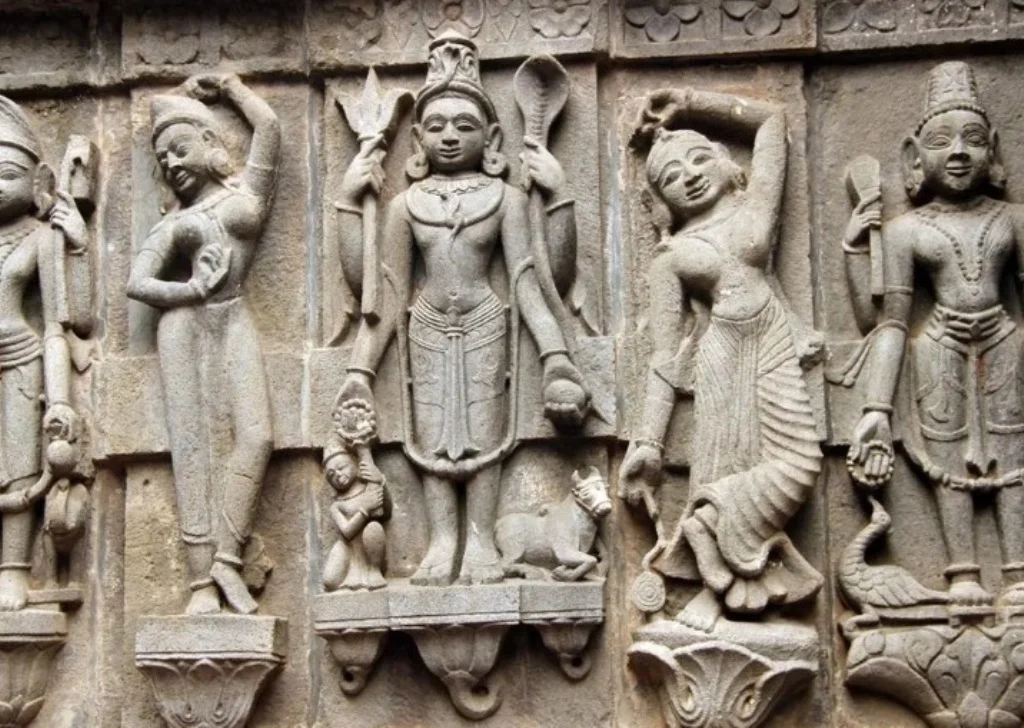
Moreover, corbelling supports the roofs. It spreads the weight through friction-based stone joints. Continuous water flow also causes symbolic erosion on the linga. This detail blends mythology with structure. Therefore, these features reflect advanced Deccan architectural techniques and make the temple a lasting example of 18th-century engineering skill.
Geographical Location of Trimbakeshwar Jyotirlinga Temple
The Trimbakeshwar Jyotirlinga Temple stands in the town of Trimbak in Nashik district, Maharashtra. It rests at the foothills of the sacred Brahmagiri Mountain. This mountain marks the origin of the Godavari River. Therefore, the temple holds great spiritual importance.
Moreover, Trimbakeshwar Jyotirlinga lies about 28 km from Nashik city. Pilgrims visit this holy site for its rare three-faced lingam, which represents Shiva, Vishnu, and Brahma.
Here’s a quick overview:
| Aspect | Details |
|---|---|
| Coordinates | Approximately 19°55′56″N 73°31′51″E. |
| State | Maharashtra |
| District | Nashik |
| Elevation | ~ 3,000 feet (approx. 914 meters) above sea level |
| River | Godavari |
How to Reach Trimbakeshwar

To reach Trimbakeshwar Jyotirlinga, travel first to Nashik city, about 28–30 km away. You can take a train to Nashik Road Railway Station. Alternatively, you can fly to Nashik Airport (Ozar). From Nashik, hire a taxi or bus to reach the temple.
Moreover, travelers from Mumbai or Pune often drive, which takes 4 to 5 hours. Many also prefer trains or buses to Nashik first. After that, local transport remains easily available for the final journey to Trimbakeshwar Jyotirlinga.
By Air
Nearest Airport: Nashik Airport (Ozar, ISK), about 50-56 km away (1-1.5 hrs drive).
Major Airport: Fly into Mumbai (Chhatrapati Shivaji Maharaj International Airport – BOM) for more options, then drive (170-180 km, 4-5 hrs) to Trimbakeshwar.
By Train
Nearest Railway Station: Nashik Road Railway Station (NK). From Nashik Road Station, take a local bus or taxi (approx. 30-60 mins) to Trimbakeshwar.
By Road (From Key Cities)
From Nashik: ~30 km (1 hour) via MSRTC buses, taxis, or private cars.
From Mumbai: ~180 km (4-5 hours) via NH3/SH21; many people do a day trip.
From Pune: Drive to Nashik first, then proceed to Trimbakeshwar.
Stay options near Trimbakeshwar Jyotirlinga Temple

Stay options near Trimbakeshwar Jyotirlinga Temple suit every budget. Several budget hotels operate within 200 to 600 meters of the temple. These stays help devotees attend early morning darshan with ease. Most offer clean rooms, vegetarian food, and parking.
Meanwhile, luxury resorts lie 10 to 30 km away in Nashik. Reviews from 2025 confirm good availability and pilgrim-friendly services. Prices usually range from ₹500 to ₹3,500 per night, depending on the season and room type. Many hotels also support family stays, making them ideal for group pilgrims.
Budget Hotels (Under ₹1,500/night)
Hotel Sai Yatri (0.1 km): Walkable to temple, budget-friendly with good reviews for one-night stays and nearby food options.
Hotel Krishna Inn (0.2 km): Spacious AC rooms at ₹800-₹1,200, clean bedding, and market access; strong for families.
Hotel Kuber Inn (450m): New build with free parking and peaceful vibe, family rooms available.
Mid-Range Hotels (₹1,500-₹3,500/night)
Hotel Dhruv Palace (near temple): 3-star with family suites, parking, banquets, and veg cuisine; convenient for events.
Hotel Radhika Inn (200m): 3-star, 39 rooms including deluxe AC at ₹3,000+, temple views from upper floors.
Three Leaves (0.7 km): Serene property with amazing views, praised for comfort near police station.
Luxury Resorts (₹5,000+/night, 10-30 km away)
Grape County Eco Resort & Spa: Top-rated (4.7/5) with excellent service and nature setting.
Viveda Wellness Village (4.7/5): Wellness-focused, clean premises, and family-friendly pool.
Mountain Shadow Resort: Nature lovers’ pick with veg/Jain food and indoor games.
Homestays and Dharamshalas
Shivvaatsalya and Shivalay Homestay: Highly rated (4.2 avg as of Dec 2025) for clean, basic stays.
Shradhanand Ashram Bhakta Nivas: 10 rooms at ₹500/day with beds, fans, and attached toilets for pooja visitors.
Booking Tips
Book your stay through TripAdvisor or Expedia to check real-time prices and refund options. However, rooms fill fast during Shravan and Mahashivratri. Therefore, always confirm parking and vegetarian food in advance.
Choose hotels within 1 km if darshan is your priority. On the other hand, select resorts if you prefer comfort and leisure along with your pilgrimage.
Daily Puja at Trimbakeshwar Temple
Morning Puja – Puja of Bramha Deva : 7.00 AM TO 8.30 AM
Mid-Day Puja – Puja of Mahadev : 10.45 AM TO 12.30 PM
Evening Puja – Vishnu Puja : 7.00 PM TO 8.30 PM
Major Festivals at Trimbakeshwar Temple
CHAITRA
On Gudhi Padva, the first day of the Chaitra month, the temple begins with special worship at 5:00 AM. The Trustees perform this sacred ritual. Later in the evening, a procession of the deity takes place.
Moreover, devotees hoist Gudhees, the colorful victory flags. The village clergyman reads the almanac, marking the traditional New Year observance.
VAISHAKH
On Akshay Trutiya, the third day of the Vaishakh month, the temple opens the Hursh Mahal within the temple premises.
SHRAVAN
During the holy month of Shravan, priests specially ornament the deity on Nagpanchami and Narali Purnima.
Moreover, on the no-moon day, known as the festival of Pola, the temple conducts a traditional procession of oxen.
BHADRAPADA
In the month of Bhadrapad, devotees celebrate Ganesh Chaturthi, also known as Vinayaka Chavithi. The festival continues for 10 days every year.
ASHWIN
On the 8th day of Ashwin, devotees offer sari-choli to the goddesses Bhuvaneshwari, Kolambika, and Nilambika.
During Dussehra (Vijaya Dashami), priests worship arms and other deities. The Trustees perform a special ritual at 5:00 AM. Later, at 4:00 PM, the deities go for the traditional boundary-crossing ritual.
During Diwali, the temple begins Narak Chaturthi with a special ritual at 5:00 AM. In the evening, priests perform Lakshmi Poojan on the designated day.
KARTIK
On Padva, the Trustees perform a special ritual at 5:00 AM. Later in the evening, at 5:00 PM, priests place the golden mask on the Shiva ling inside the temple.
In the month of Kartik, the temple hosts keertan for three days. These fall on the 13th day, 14th day, and the full moon day. During this time, devotees take out a chariot procession of Trimbakraja. Priests also perform pooja at Kushavarta Tirth.
After the chariot returns to the temple, devotees worship the Deepmal in front of the shrine at 7:30 PM. They light the lamps with devotion. Shri Ruikar performs this sacred pooja.
MAGH
On Vasant Panchami, the 5th day of the Magh month, priests specially ornament the deity.
On Mahashivaratri, the temple takes out the palanquin procession of Trimbakraja through the village. Later at night, devotees attend keertan from 10:00 PM to 12:00 midnight.
FALGUN
On Holipoonam, the full moon day of Falgun, priests perform Holika Poojan. On the next day, Dhoolivandan, they specially ornament the deity. Later, on Rangpanchami, the fifth day, devotees gently offer colors to the deity.
Moreover, on every Monday, the temple takes out the palanquin procession of Trimbakeshwar to Kushavarta Tirtha. Priests perform pooja at the sacred site.
Places of attraction near Trimbakeshwar Jyotirlinga Temple
Several attractions lie within 1–20 km of Trimbakeshwar Jyotirlinga Temple. They combine natural beauty, treks, and sacred sites, making them ideal for pilgrims and explorers.
These spots enhance the temple visit with short hikes to hills and waterfalls. They also appeal to those on cultural and research-focused trips. Many sites highlight mythology-linked landscapes near the source of the Godavari River.
Kushavarta Kund
Kushavarta Kund is a sacred, perennial water tank near Trimbakeshwar Jyotirlinga Temple in Maharashtra. Devotees regard it as the symbolic source of the Godavari River. The kund remains deep and full throughout the year, adding to its spiritual importance.
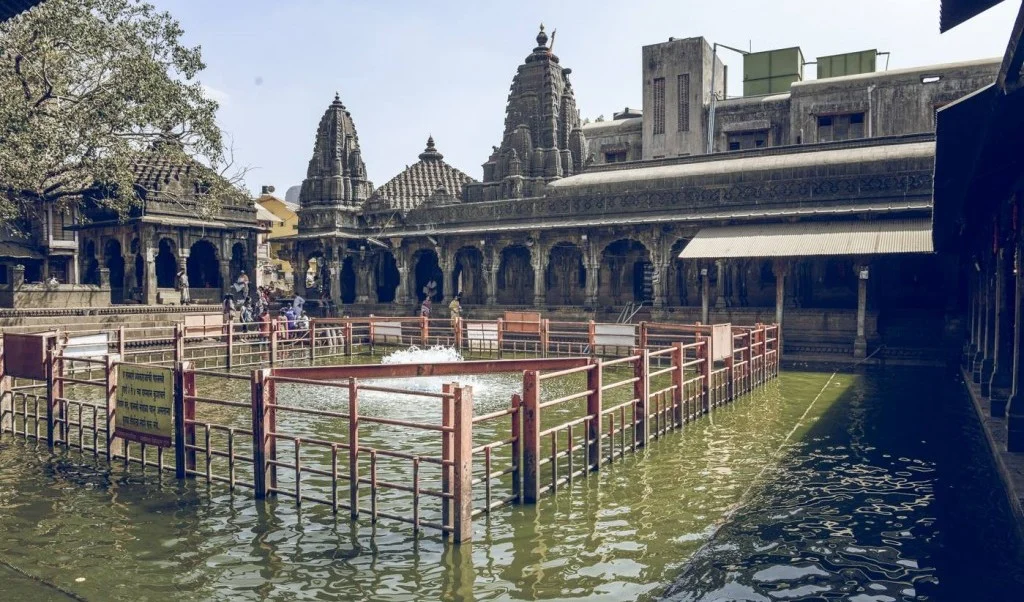
The Holkars built Kushavarta Kund in 1750. Stone steps and small temples surround the tank. Therefore, pilgrims consider it ideal for holy bathing and rituals. The kund holds special significance during the Kumbh Mela, when thousands of devotees gather here.
Brahmagiri Hills
The Brahmagiri Hills in Nashik, Maharashtra, attract nature lovers and trekkers. These hills rise to about 1,295 meters. They offer wide, panoramic views of the surrounding landscape.
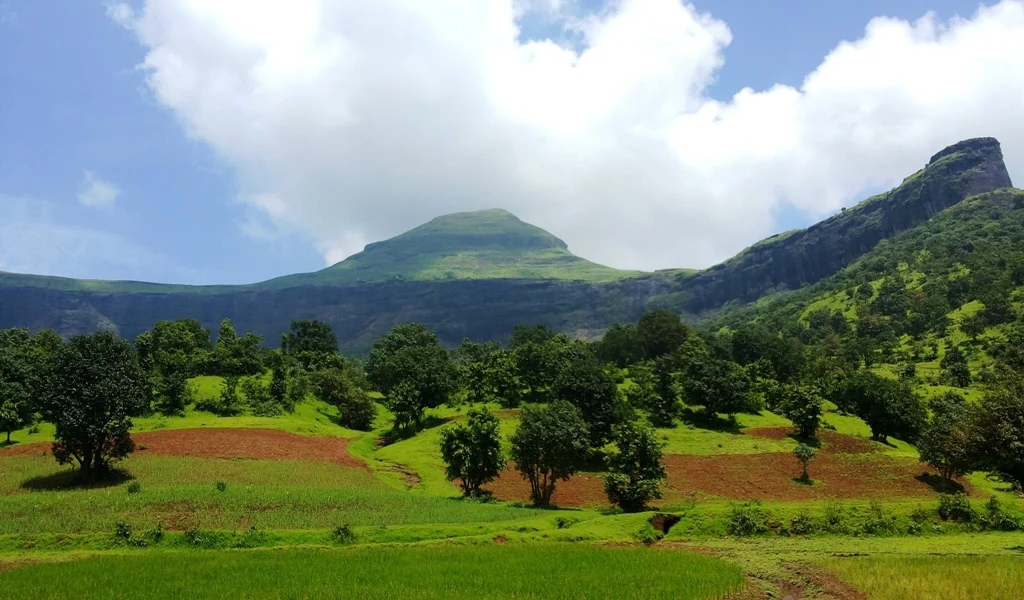
Moreover, the Brahmagiri Hills hold deep spiritual value. The sacred Godavari River flows from these mountains. Therefore, devotees deeply respect and revere the hills, making them a must-visit near Trimbakeshwar Jyotirlinga.
Neel Parbat
Neel Parbat sits on the eastern edge of the Brahmagiri Hills. It remains one of the less explored attractions near Trimbakeshwar. Therefore, it offers a peaceful escape for nature lovers.
The hill stays lush and green throughout the year. It rewards visitors with awe-inspiring scenery and breathtaking views of the Trimbakeshwar hills.
Dugarwadi Waterfall
Dugarwadi Waterfall lies about 30 km from Nashik and around 177 km from Mumbai on the Trimbakeshwar road. It also sits just 2 km from Jawhar road.
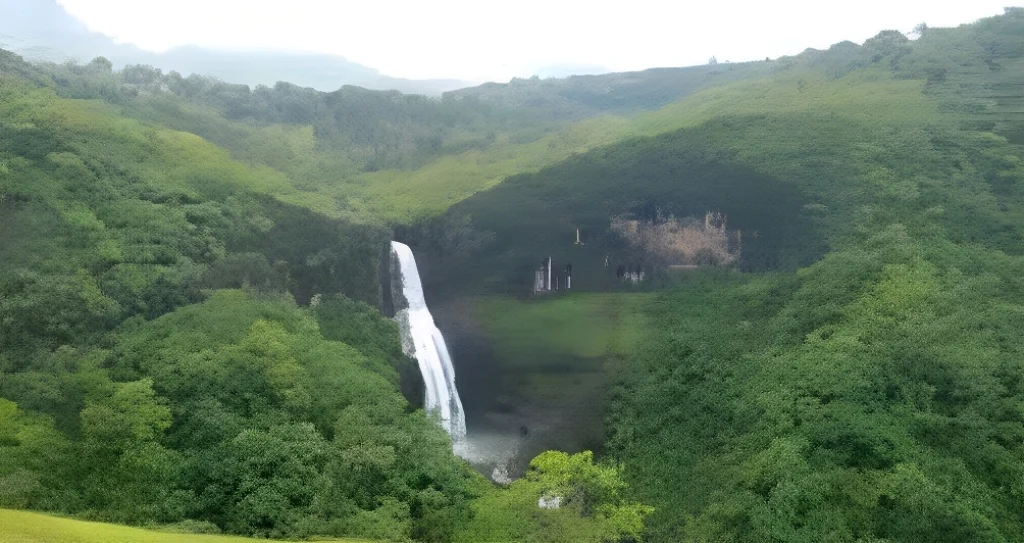
During the monsoon season, visitors should remain cautious. The water level can rise suddenly, so safety is essential while exploring the area.
Harihar Fort
Harihar Fort, also known as Harshgad, stands as a famous hilltop fort in Nashik, Maharashtra. It draws attention for its nearly vertical, rock-cut staircase. As a result, the trek feels thrilling but challenging. People with a fear of heights should take extra care.
From the top, the fort offers stunning Sahyadri views. The peak forms a triangular, prism-like shape. In the past, the fort guarded ancient trade routes. Today, it attracts adventure trekkers from across the region.
Trekkers usually start from Harshewadi or Nirgupada villages. However, the steps remain steep, exposed, and slippery, especially during the monsoon. Therefore, caution is essential throughout the climb.
Conclusion
Visiting Trimbakeshwar Jyotirlinga is more than a pilgrimage; it is a journey into the heart of spiritual India. From its unique three-faced Shiva lingam to the ancient architecture, sacred rituals, and scenic surroundings, every aspect of the temple reflects devotion, history, and culture. Pilgrims can witness legendary festivals, serene water tanks, and majestic hills, making each visit memorable.
Whether you are a devotee seeking divine blessings, a history enthusiast exploring 18th-century Maratha architecture, or a traveler drawn to mythology-rich landscapes near the Godavari River, Trimbakeshwar Jyotirlinga offers a profound and fulfilling experience. Plan your trip wisely, explore nearby attractions, and immerse yourself in the timeless spiritual aura of this sacred Jyotirlinga.
Book your visit, witness the rituals, and experience the divine at Trimbakeshwar Jyotirlinga today!
Frequently Asked Questions (FAQs)
Trimbakeshwar Jyotirlinga is famous for its three-faced lingam, which represents Brahma, Vishnu, and Shiva in one form. It is also the origin place of the Godavari River.
The Trimbakeshwar Jyotirlinga Temple is located in Trimbak town, Nashik district, Maharashtra. It lies at the foothills of the Brahmagiri mountain.
The best time to visit is from October to March. Many devotees also visit during Shravan month and Mahashivaratri, though crowds remain heavy then.
Trimbakeshwar Jyotirlinga is about 28–30 km from Nashik city. You can reach it easily by taxi, bus, or private vehicle.
Yes, devotees can book online darshan and special poojas through the official temple trust website. Advance booking helps during peak seasons.
Important rituals include Abhishek, Rudrabhishek, Mahapuja, Narayan Nagbali, and Tripindi Shraddha. Many people visit for ancestral rituals.