
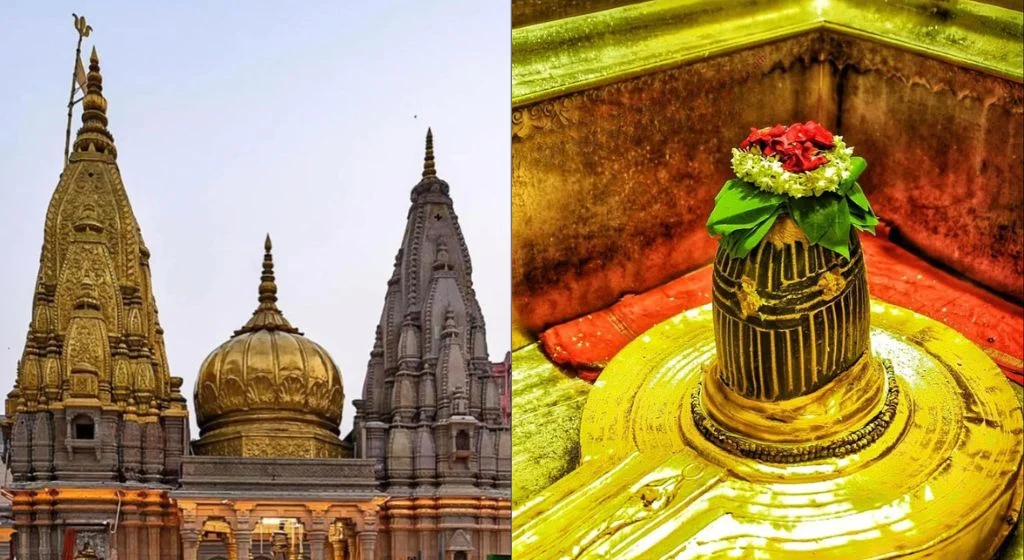


Kashi Vishwanath stands at the spiritual heart of Varanasi. For centuries, devotees have believed that Lord Shiva lives here. As a result, this sacred temple holds immense spiritual power.
Moreover, Kashi Vishwanath is one of the twelve holy Jyotirlingas. Because of this, pilgrims visit the shrine to seek moksha. At the same time, they come to experience peace and devotion.
Over time, it has shaped the soul of Kashi. Therefore, its history, rituals, and legends continue to guide seekers.
Myth Behind Kashi Vishwanath Jyotirlinga
It is believed that Varanasi witnessed the first manifestation of a Jyotirlinga. According to legend, Lord Shiva appeared here as an endless pillar of light. This event took place during a dispute between Brahma and Vishnu over supremacy.
To resolve the conflict, Shiva revealed his infinite form. Then, Vishnu took the form of Varaha, the boar. He searched deep beneath the earth for the base of the glowing column. Meanwhile, Brahma assumed the form of a swan. He flew across the skies to find the top of the radiant pillar. However, neither could discover its origin or end.
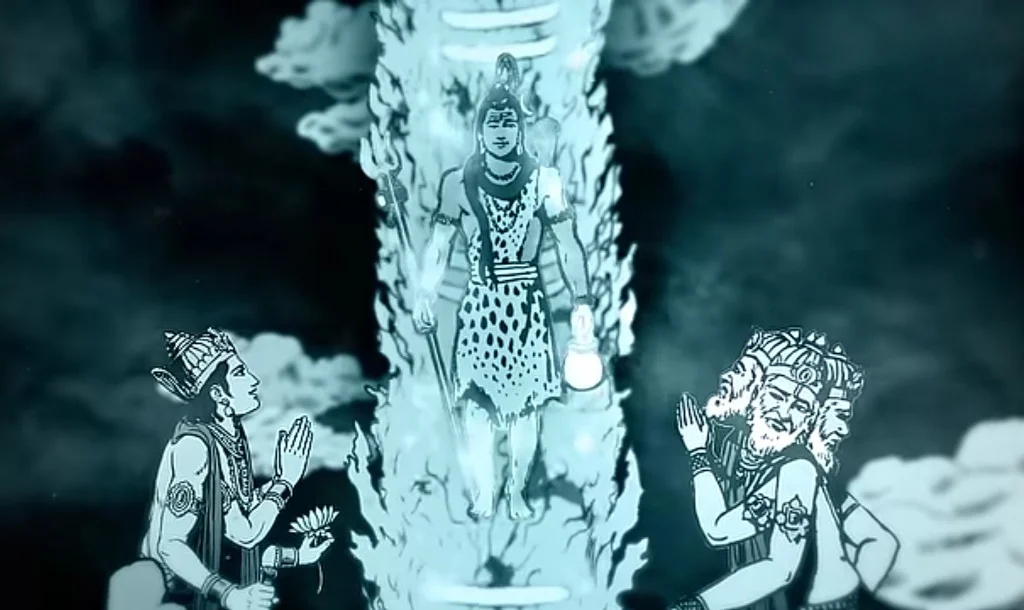
Despite this, Brahma falsely claimed success. In contrast, Vishnu humbly accepted his failure. As a result, Shiva punished Brahma for his deceit. He severed Brahma’s fifth head and placed a lasting curse upon him. Therefore, Brahma lost the right to widespread worship. Vishnu, on the other hand, earned eternal reverence alongside Shiva. Consequently, devotees continue to honor both with temples across time.
Historical Journey of Kashi Vishwanath Temple
Legends say Lord Shiva established this sacred site near Manikarnika Ghat. Because of this, devotees believe he protects Kashi on his trident. Even during cosmic dissolution, he never abandons the city. Therefore, people know Kashi as Avimukta Kshetra, the never-forsaken land. Moreover, Vedic scriptures mention an early Shiva shrine at this place. These references suggest its presence by the second millennium BCE.
Medieval Destructions
The temple faced its first major assault in 1194 CE. At that time, Qutb-ud-din Aibak led the attack under Muhammad Ghori. After defeating the ruler of Kannauj, his forces demolished the shrine. Later, reconstructions began. During Iltutmish’s reign, a Gujarati merchant rebuilt the temple. However, Sikandar Lodi later destroyed it once again.
Meanwhile, Emperor Akbar supported revival efforts. Raja Man Singh and Todar Mal worked to restore the temple. Yet in 1669, Aurangzeb ordered its destruction. As a result, workers used the temple debris to build the Gyanvapi Mosque.
18th-Century Revival
In 1780, Ahilyabai Holkar of Indore rebuilt the present temple near the mosque site. To achieve this, she appointed skilled workers and secured permission from the Nawab of Awadh.
The temple houses a 60 cm black Shiva Linga on a silver pedestal. Moreover, artisans adorned the structure with intricate carvings. It also includes smaller shrines dedicated to deities like Kaal Bhairav.
Later, in the 19th century, Maharaja Ranjit Singh made a historic donation. He offered one tonne of gold to cover the domes and spires.
Modern Developments
In recent years, the temple has seen major enhancements. After detailed structural checks, workers added gold plating to the inner walls and shikharas. In 2022, an anonymous donor contributed 60 kg of gold for this work.
Meanwhile, the Kashi Vishwanath Corridor marked a historic change. Authorities inaugurated it in 2021. The corridor spreads across five acres and links the temple to the Ganges. As a result, pilgrim movement became smoother and safer. The complex now offers prayer halls and improved facilities.
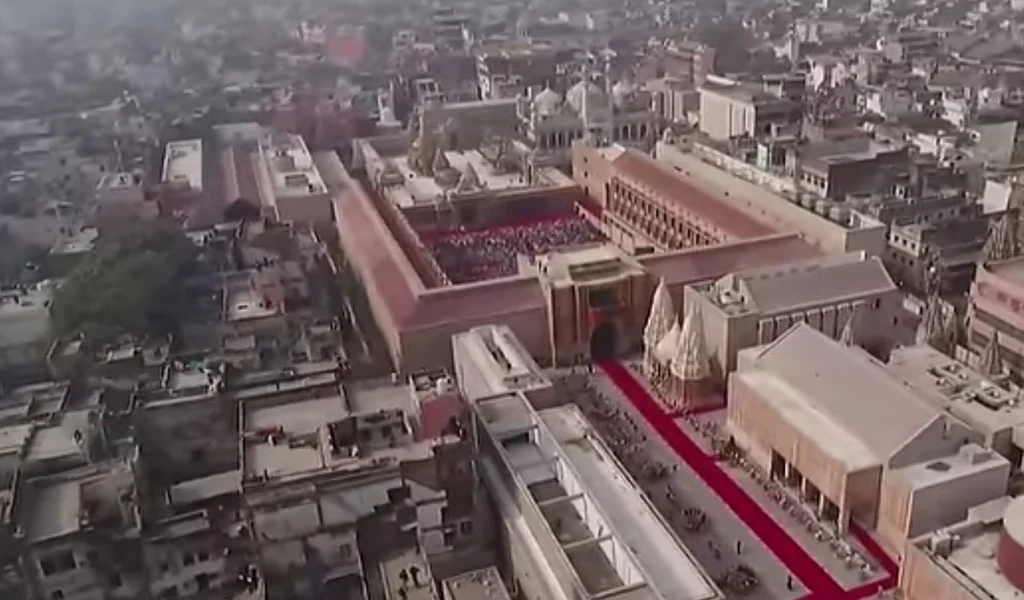
Despite these changes, traditions remain alive. Daily rituals continue without interruption. Moreover, Mahashivratri processions still follow ancient customs. Thus, the temple preserves its sacred role as a gateway to moksha.
Architecture of Kashi Vishwanath Temple
The temple complex includes several smaller shrines. These shrines stand along a narrow lane called Vishwanatha Gali, near the river Ganga.
At the center, the main shrine houses the sacred Jyotirlinga. It stands 60 centimetres tall and measures 90 centimetres in circumference. A silver altar protects the linga.
Moreover, the main temple follows a quadrangular layout. Shrines to various deities surround it on all sides. Within the complex, devotees find small temples dedicated to Kala Bhairava and Kartikeya. They also see shrines for Avimukteshwara, Vishnu, and Ganesha. In addition, temples for Shani, Shiva, and Parvati complete the sacred space.
The temple contains a small sacred well called Jnana Vapi, also known as Gyan Vapi. It lies to the north of the main temple.
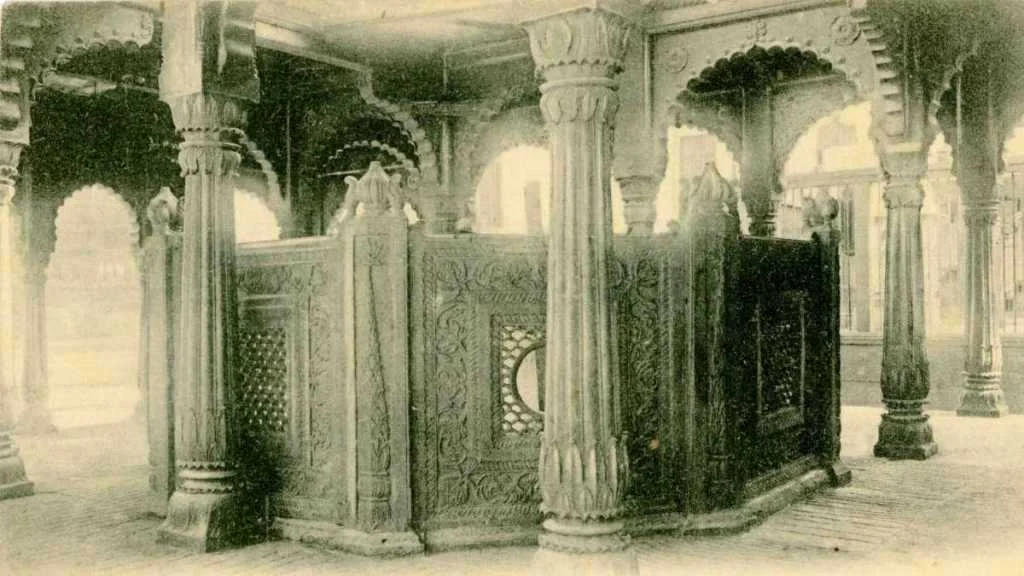
During the Mughal invasion, priests acted swiftly to protect the Jyotirlinga. Therefore, they hid it inside this well.
According to tradition, the chief priest took a final, brave step. He jumped into the well with the sacred lingam. In this way, he saved the Jyotirlinga from the invaders.
A Sabha Griha, or congregation hall, leads devotees toward the inner Garbha Griha. This sanctum sanctorum houses the sacred Jyotirlinga. Priests place it on a silver platform inside the sanctuary.
Moreover, the temple structure has three distinct sections. First, a spire rises 15.5 meters above the temple. Next, a gold dome adds grandeur to the design. Finally, a golden spire crowns the sanctum. It bears a sacred flag and a trident.
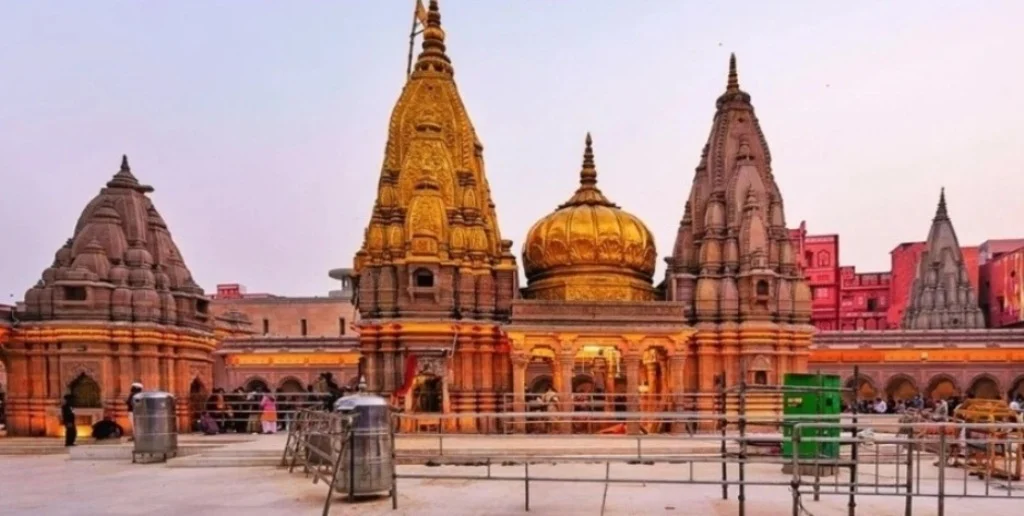
The Kashi Vishwanath Temple is widely known as the Golden Temple. This name comes from the gold plating on its spire. In the 19th century, Maharaja Ranjit Singh made a historic donation. He offered one tonne of gold for the temple.
As a result, artisans used it to plate the spire. Moreover, they crafted three domes from pure gold. These domes, donated in 1835, still shine today.
The Shri Kashi Vishwanath Dham Corridor connects the Kashi Vishwanath Temple to Manikarnika Ghat. It runs along the banks of the Ganges River.
As a result, pilgrims now enjoy smoother access to the sacred sites. Moreover, the corridor offers several modern amenities for their comfort.
Geographical Location of Kashi Vishwanath
Kashi Vishwanath Temple is a sacred Hindu shrine dedicated to Lord Shiva. It stands in Vishwanath Gali in Varanasi, Uttar Pradesh. Because of its deep spiritual value, the temple draws pilgrims from across India. Moreover, it is one of the twelve revered Jyotirlinga shrines. The presiding deity bears the names Vishwanath and Vishweshwara. Both names mean the Lord of the Universe.
Here’s a quick overview:
| Aspect | Details |
|---|---|
| Coordinates | Approximately 25°18′38.79″N 83°0′38.21″E. |
| State | Uttar Pradesh |
| City | Varanasi |
| Elevation | ~ 120-130 meters (400-430 ft) above sea level |
| River | Ganga |
How to Reach Kashi Vishwanath Temple

To reach Kashi Vishwanath Temple, first travel to Varanasi. You can arrive by flight or train at VNS or BSB.
After that, use local transport. Autos, taxis, and e-rickshaws serve the temple area near the ghats.
However, the final stretch often requires a short walk. Some pilgrims also choose a brief boat ride through narrow galis.
Moreover, devotees can opt for Sugam Darshan for quicker entry. In the future, planned ropeway services will further ease access.
Getting to Varanasi (Kashi):
- By Air: Fly to Lal Bahadur Shastri International Airport (VNS).
- By Train: Varanasi Junction (BSB) or Kashi Railway Station (KEI) are major hubs.
- By Road: Bus services connect Varanasi to many cities.
From Varanasi to the Temple:
- Varanasi Junction (BSB): About 6 km away; take an auto, taxi, or e-rickshaw.
- Varanasi City Station (KEI): Closer, around 2 km.
- Local Transport: Use pre-paid taxis, auto-rickshaws, or e-rickshaws to reach the Dashashwamedh Ghat/Manikarnika Ghat area.
- Walking / Boat: The temple is in a dense area; you’ll likely walk through narrow lanes (galis) or take a short boat ride from the ghats to the temple entrance.
Stay options near Kashi Vishwanath Temple

Near Kashi Vishwanath Temple, most stay options lie in the old city lanes. They also cluster around the Dashashwamedh and Meer Ghat area. As a result, devotees can walk to the mandir within minutes. Moreover, the main ghats remain just a short stroll away.
Alka Hotel
Low‑key riverside hotel at Meer Ghat with simple AC rooms; some have balconies directly overlooking the Ganga, and it is a short walk through the gallis to Kashi Vishwanath Temple and Dashashwamedh Ghat. Good fit if you want to combine darshan with frequent ghat walks and sunrise views.
The White House
Modern-style hotel in Nai Sarak area branded explicitly as near Kashi Vishwanath Temple, with very high recent ratings and around 500+ reviews; location gives easier access by road while still being walkable to the corridor. Suitable if you prefer cleaner approach roads and a more contemporary stay rather than right on the ghats.
Southern Grand Kashi
Simple hotel and dorm-style accommodation located right in the Kashi Vishwanath Corridor zone near the temple complex, offering very close access for multiple darshans and a basic, no-frills stay. Best if proximity to the shrine matters more than room luxury.
Kashi Stay Guest house
Straightforward guest house just off Dashashwamedh with simple rooms, some with shared bathrooms, and strong reviews, giving you quick access to the Ganga aarti as well as the temple through the inner lanes. Good budget option if you are comfortable with basic facilities and want to stay right in the yatra zone.
Key Rituals at Kashi Vishwanath Temple
Kashi Vishwanath Temple in Varanasi features daily rituals centered on Lord Shiva worship, emphasizing purification and devotion. These practices draw millions of pilgrims seeking spiritual liberation.
Daily Aartis
The temple conducts five main aartis daily, marking Shiva’s daily cycle. Mangala Aarti at dawn (around 3 AM) awakens the deity with conch shells and chants. Shringar Aarti adorns the lingam with flowers and jewelry in the morning, while Sandhya Aarti at dusk illuminates the shrine with lamps. Shayan Aarti closes the day, putting Shiva to rest around 10:30 PM.
Rudrabhishek Ritual
Rudrabhishek bathes the sacred Jyotirlingam with milk, ghee, honey, and holy water amid Vedic mantras. Performed between 4 AM and 6 PM, it purifies sins and invokes prosperity. Devotees book slots for participation, enhancing personal connection to Shiva.
Other Key Practices
Pilgrims often start with a Ganges dip for cleansing before darshan. Pouring water on the lingam while chanting erases sins upon sight. Special occasions amplify these with extended Rudrabhishek for soul purification.
Schedule of all Aartis and Poojas at Kashi Vishwanath Temple
Kashi Vishwanath Temple opens at 2:30 AM and closes at 11 PM daily, with structured aartis and poojas following Lord Shiva’s daily routine. Darshan timings include 4-11 AM, 12 Noon-7 PM, and 8:30-9 PM, with limited outer viewing after 9 PM.
Aarti Schedule
Mangala Aarti occurs from 3-4 AM, allowing ticket holders to join the awakening ritual. Midday Bhog Aarti runs 11:30 AM-12 PM, offering prasadam to the deity. Sapta Rishi Aarti takes place 7-8:30 PM, followed by Shringar/Bhog Aarti at 9 PM and Shayan Aarti at 10:30 PM to close the day.
Pooja Offerings
Rudrabhishek, Maharudrabhishek, and Laghurudrabhishek poojas occur between 4 AM-6 PM for sin purification and planetary remedies. Special poojas like Shravan Somvar and Lakh Vilvarchana are available on auspicious days, bookable online via the official site. Long-term schemes such as Dainik Pooja provide annual rituals for 20 years.
How to book Rudrabhishek participation at Kashi Vishwanath temple
Official bookings for Rudrabhishek participation at Kashi Vishwanath Temple occur through the Shri Kashi Vishwanath Temple (SKVT) website at shrikashivishwanath.org. Devotees select options like Rudrabhishek (5 Shastri) or video conference variants, complete payment, and print a hard copy of the ticket for the pooja.
Booking Steps
Visit the official SKVT pooja booking section and choose your ritual variant, date, and time slot between 4 AM-6 PM. After confirmation, proceed to the SKVT helpdesk near Shapuri Mall, Bansfatak, to get assigned a Shastri/Archak and perform the ritual. Contact the helpdesk at +91 6393131608 for guidance or video participation.
Key Details
One ticket covers one family; carry ID and the printed ticket. Third-party sites offer proxy services where priests perform on behalf, but direct participation requires SKVT tickets. Book early for peak seasons to secure slots.
Places of attraction near Kashi Vishwanath Temple
Several key attractions surround Kashi Vishwanath Temple in Varanasi’s bustling Godowlia area, offering spiritual, cultural, and riverside experiences within walking distance.
Nearby Ghats
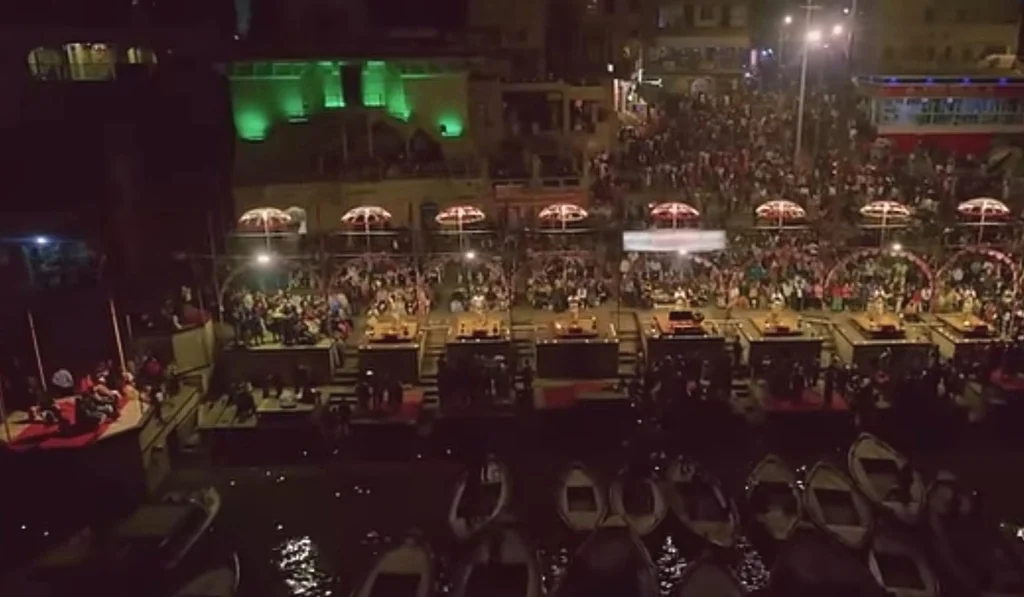
Dashashwamedh Ghat, just minutes away, hosts the iconic evening Ganga Aarti with synchronized lamps and chants, drawing crowds for its vibrant rituals. Manikarnika Ghat nearby serves as a sacred cremation site symbolizing life’s cycle and moksha.
Temples and Markets
The Kashi Vishwanath Corridor connects directly to smaller shrines and the Jnana Vapi well, enhancing temple visits. Thatheri Bazaar and Vishwanath Gali lanes offer Banarasi silk sarees and street food amid narrow alleys.
Further Spots
Sarnath, a short 10 km drive, features the Dhamek Stupa and Ashoka Pillar where Buddha gave his first sermon. Assi Ghat provides serene yoga and festival vibes further along the Ganges.
Conclusion
Kashi Vishwanath Temple stands as Varanasi’s eternal heartbeat, where the Jyotirlinga’s radiant light pierces through millennia of devotion, destruction, and rebirth – from ancient myths of Shiva’s cosmic pillar to Ahilyabai Holkar’s resilient reconstruction. Amidst the symphony of aartis, Rudrabhishek chants, and Ganges whispers at nearby ghats like Dashashwamedh, every ritual and gali adventure weaves pilgrims into Kashi’s promise of moksha. Embrace this divine corridor of history and spirituality; your journey here transcends time, leaving the soul forever transformed.
Frequently Asked Questions (FAQs)
The temple opens at 2:30 AM and closes at 11 PM daily. General darshan occurs from 4-11 AM, 12 Noon-7 PM, and 8:30-9 PM, with outer viewing afterward.
Mangala Aarti: 3-4 AM; Bhog Aarti: 11:30 AM-12 PM; Sapta Rishi: 7-8:30 PM; Shringar/Bhog: 9 PM; Shayan: 10:30 PM.
Use shrikashivishwanath.org for online tickets, select slot (4 AM-6 PM), pay, print, and visit the SKVT helpdesk (+91 6393131608).
Dress modestly, avoid leather items; carry ID for poojas. Book early for peak times.
Dashashwamedh Ghat for Ganga Aarti, Kashi Corridor, Thatheri Bazaar – all walkable.
https://en.wikipedia.org/wiki/Arunachalesvara_Temple The Mythology of the Arunachaleshwara Temple in Tiruvannamalai says that Lord Shiva took the jyotirlinga form at the Arunachala Hills of Tiruvannamalai. which one is true?
First I would like to thank you for your comment. According to the Shiva Purana, Brahma (god of creation) and Vishnu (god of preservation) had an argument over their supremacy. Lord Shiva took the form of jyotirlinga to settle the debate between them. The same concept is written in the page you have referred in your comment.
Finally, It is all about belief not proof.