

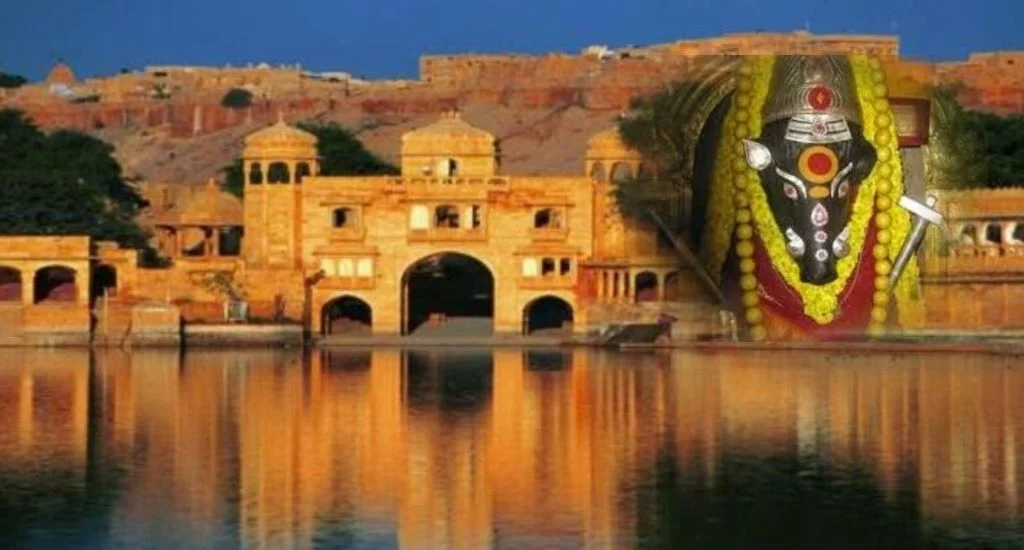


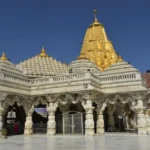
The Varahi Pancha Sagar Shakti Peeth Temple is located at D 16/84, Manmandir Ghat, Panchsagar, Varanasi, Uttar Pradesh 221001. The temple is dedicated to Maa Varahi, a form of divine feminine energy. It is one of the 51 Shakti Peethas and holds great importance as a Hindu pilgrimage site.
Whether you’re a pilgrim seeking divine blessings or a traveler craving stories steeped in sacred energy, Varahi Panch Sagar promises an experience that lingers far beyond the visit.
Mythology: The Tantric Warrior Goddess of the Night
In the vast shrines of Hindu goddesses, Varahi holds a unique and formidable position. She is not just a divine mother figure but a fierce, nocturnal warrior—an embodiment of Shakti.
Varahi is one of the Sapta Matrikas, the seven mother goddesses who emerged from the bodies of male gods to wage war against demonic forces. Specifically, she is the feminine energy of Varaha, the boar-headed avatar of Lord Vishnu. Unlike her male counterpart, who lifts the Earth from the cosmic waters, Goddess Varahi dives into the deep. She destroys evil and wrongdoing with her fearsome tusks.
You may also explore four Adi Shaktipeethas: Vimala, Tara Tarini, Kamakhya and Kalighat.
Occult wisdom
Tantric scriptures such as the Varahi Tantra and Rudrayamala hail her as the goddess of the night. Advanced practitioners often invoke her during midnight rituals. She rides a buffalo, carries a plough and a discus, and her face is that of a wild boar—untamed, fearless, and protective. Unlike more benevolent forms of Devi, Varahi operates in the shadows, granting boons of occult wisdom, courage, and spiritual transformation to those who dare approach her with pure intent.
According to Shakta traditions, after Sati’s self-immolation and the subsequent dismemberment of her body by Vishnu’s Sudarshan Chakra, her sacred body parts fell across the Indian subcontinent, forming the 51 Shaktipeethas. It is believed that at Panch Sagar, her lower teeth (daant) fell to the earth, making it a potent site of tantric energy and a vital nodal point in the Shaktipeetha circuit.
What makes Varahi Panch Sagar distinct is not only the fallen relic but also the esoteric worship practices associated with the goddess. Devotees rarely worship her in the open. Most perform rituals in silence or secrecy, under the cover of darkness and often outside traditional temple hours. Yet her devotees believe that she grants protection, fulfills righteous desires, and cuts through illusion like a divine tusk.
To truly understand Varahi, one must look beyond iconography and legend. She is not just a deity but a force—raw, primal, maternal, and untamed. Panch Sagar remains one of the few places in India where devotees still worship this enigmatic goddess in her full tantric splendor.
Historical Background of Varahi Panch Sagar Shaktipeeth
The origin of Varahi Panch Sagar lies deep within the religious and cultural fabric of northern India, particularly the Awadh region. Although mainstream historical chronicles rarely highlight this site, ancient scriptures and regional records from the early medieval period frequently mention Varahi worship, especially in its tantric context.
Dakshinachara and Vamachara Paths
Tantric texts such as the Rudrayamala Tantra, Tantrasara, and Varahi Tantra prominently reference Goddess Varahi, describing her as a pivotal deity in both the Dakshinachara and Vamachara paths of worship. These texts often refer to her as Dandini—the commander of the divine feminine forces—and associate her with secrecy, night rituals, and battlefield power. Several inscriptions from the Gupta and post-Gupta periods (4th–7th century CE) also mention the Sapta Matrikas, indicating that the cult of the Matrikas had strong regional roots in central and northern India, including parts of present-day Uttar Pradesh.
Shakta expansion during the early medieval era
Local oral traditions preserved by temple priests and the surrounding villages claim that the Varahi temple at Panch Sagar dates back more than a thousand years. Although these accounts lack direct archaeological evidence, they align with the broader timeline of Shakta expansion during the early medieval era, particularly under regional dynasties like the Gahadavalas and Kalachuris, who actively patronized esoteric and tantric traditions.
Interestingly, this temple remained relatively obscure throughout the colonial period, primarily due to its association with non-mainstream forms of worship. Unlike larger temples that colonial authorities documented for their architecture and revenue significance, Varahi Panch Sagar remained largely insulated, preserved through local traditions and secretive rituals handed down over generations.
In recent decades, with renewed academic interest in tantric Shaktism, scholars have begun revisiting lesser-known Shaktipeethas like this one. Pilgrims and spiritual seekers are drawn to the temple for its pure atmosphere and mysterious history. These qualities make Varahi Panch Sagar an important spiritual site with a deep and rich past.
Architecture: Simplicity Meets Sanctity
The architectural framework of Varahi Panch Sagar presents a rare case study of sacred continuity over monumental scale. Unlike the grandiose temple complexes of North India with towering shikharas and extensive mandapas, Varahi Panch Sagar retains a vernacular, ritual-centric design that aligns more with tantric and rural temple traditions of the early medieval period.
Structural Observations
The temple is modest in size and plan, likely built using locally sourced laterite and sandstone blocks, a technique prevalent in 9th–12th century rural temple construction across Uttar Pradesh and parts of Bihar. The sanctum (garbhagriha) is a simple square chamber, with thick stone walls and a flat roof, now supported by additional brick-and-mortar repairs over time.
Unlike standard Nagara-style temples which typically include a mandapa (pillared hall) and ornate doorways, this structure lacks decorative reliefs or intricate carvings. However, this simplicity is not a sign of incompleteness but rather a reflection of the temple’s esoteric character.
Iconography & Tantric Symbolism
The idol of Goddess Varahi is distinctive and adheres closely to tantric iconographic prescriptions found in texts like the Tantrasara and Varahi Tantra. She appears with a boar face (varaha-mukhi) and a human body, holding a plough and a chakra—symbols of agricultural fertility and cosmic protection. Layers of sindoor and ghee coat the black-stone idol, reflecting centuries of ritualistic anointment.
Numerous trishuls (tridents) embedded around the sanctum and in the outer courtyard draw particular archaeological interest. These are not merely decorative but serve as ritual markers, a tradition dating back to early Shaiva and Shakta cults where devotees plant tridents as votive offerings.
Surrounding Features
Adjacent to the main sanctum is a sacred water tank or pond (sagar), from which the temple derives its name. Such water bodies were integral to temple complexes during the early medieval period, serving both ritual purification and symbolic representation of cosmic waters. The orientation of the temple—facing the east and aligned with the pond—suggests an intentional layout to harness solar and elemental energies, a key aspect in tantric site selection.
Interpretative Conclusion
From an archaeological perspective, Varahi Panch Sagar stands as a rare surviving example of a living tantric shrine—unrefined, untouched by modernization, and steeped in localized architectural traditions. Its lack of ornamental excess and focus on functionality, sacred geometry, and elemental alignment speak volumes about the priorities of its builders.
This temple isn’t just a structure; it’s a ritual space, preserved more by faith than by stone. It offers us a living museum of how sacred architecture can evolve through centuries without losing its core spiritual identity.
Geographical Location of Varahi Panch Sagar Shaktipeeth
Varahi Panch Sagar is located in the Bhadohi district of Uttar Pradesh, India. Its proximity to Balha and Nanpara towns makes it accessible yet peacefully isolated from commercial tourism.
Here’s a quick overview:
| Aspect | Details |
|---|---|
| Coordinates | 25.3045°N, 82.9888°E |
| State | Uttar Pradesh |
| District | Bhadohi (also known as Suriyavan) |
| Elevation | ~265 feet above sea level |
A serene pond, or “Sagar,” lies beside the temple and gives it the name “Panch Sagar.” Surrounded by mango orchards, rice fields, and forested areas, the landscape adds an immersive touch to your spiritual journey.
How to Reach Varahi Panch Sagar

By Air
The nearest airport is Lal Bahadur Shastri International Airport (VNS), located about 25-30 km from Varahi Panch Sagar. Major Indian cities connect directly to this airport.
By Train
The closest railway station to the temple is Varanasi Railway Station. Lucknow serves as a convenient transit hub.
By Road
Varahi Panch Sagar is accessible via well-connected highways from nearby towns and cities.
| Destinantion | Distance (Approx.) |
| Ayodhya | 219 km |
| Lucknow | 312 km |
| Allahabad (Prayagraj) | 122 km |
Roads are generally motorable, but the last few kilometers are rural and narrow—plan accordingly if traveling in monsoon season.
Where to Stay

Here are some recommended places to stay near the Varahi Temple:
Hotel Dolphin Grand
Varanasi, A-1, B-12/119 Beside LIC Office, Bhelupur, Varanasi 221010 India
Sun Rise Lodge
Meer Ghat D 3/21, Varanasi 221001 India
0.1 miles from Sri Varahi Devi Temple
Hotel Alka
Meer Ghat D 3/23 near Golden Temple, Varanasi 221001 India
0.1 miles from Sri Varahi Devi Temple
Rashmi Guest House
No 16/28, A Dasaswamedh, Varanasi 221001 India
0.0 miles from Sri Varahi Devi Temple
Best Time to Visit
| Month | Weather | Why Visit? |
| October–March | Pleasant, 10–25°C | Ideal for darshan and exploration |
| April–June | Hot, 35–45°C | Avoid unless attending a ritual |
| July–September | Humid, monsoon rains | Devotees gather for Navratri |
Festivals: A Divine Gathering
The temple bursts to life during Navratri, especially the Ashwin Navratri in October. Other key festivals include:
- Chaitra Navratri (March–April)
- Varahi Jayanti (celebrated by Tantric followers)
- Full Moon Nights (Purnima) – considered highly auspicious
During these festivals, you’ll witness:
- Tantric pujas performed secretly in the forest
- Local folk songs and kirtans
- Women lighting 108 diyas around the pond
Local People & Culture
Goddess Varahi presides over the Varahi Panch Sagar Shaktipeeth, a special temple located near Varanasi in Uttar Pradesh. The temple stands out for its unique rituals and deep spiritual traditions. The local people actively practice these customs, which strongly connect to the culture of Varanasi and its nearby areas.
- A protected city: According to local belief, Maa Varahi guards Varanasi at night. Because of this, her temple remains open to visitors only for a few hours in the morning and closes after the dawn rituals. At night, the priest performs Tantric rituals of the Vamamarga tradition to worship the goddess.
- Syncretic faith: Devotees of Shaktism (worship of the Goddess), Shaivism (devotion to Lord Shiva), and Vaishnavism (devotion to Lord Vishnu) all revere this temple. It is one of the rare places where followers of these three main paths of Sanatana Dharma come together in worship.
- Guardian deity: In the past, local rulers and warrior clans worshipped Goddess Varahi as their protector and sought her blessings before going to battle. Even today, devotees pray to her for strength, courage, and the fulfillment of their wishes.
- Underground darshan: Devotees look through a small hole in a marble slab to see the goddess’s idol, which lies in an underground chamber. Only the head priest enters this sacred space.
- Sacred power: People believe that looking directly into the goddess’s eyes can cause blindness because of her immense divine power. This belief strengthens the deep respect and devotion people have for Maa Varahi.
Nearby Attractions
Exploring the nearby areas can enrich your trip. These spots offer a spiritual, natural, and cultural balance for curious travelers.
Katarniaghat Wildlife Sanctuary
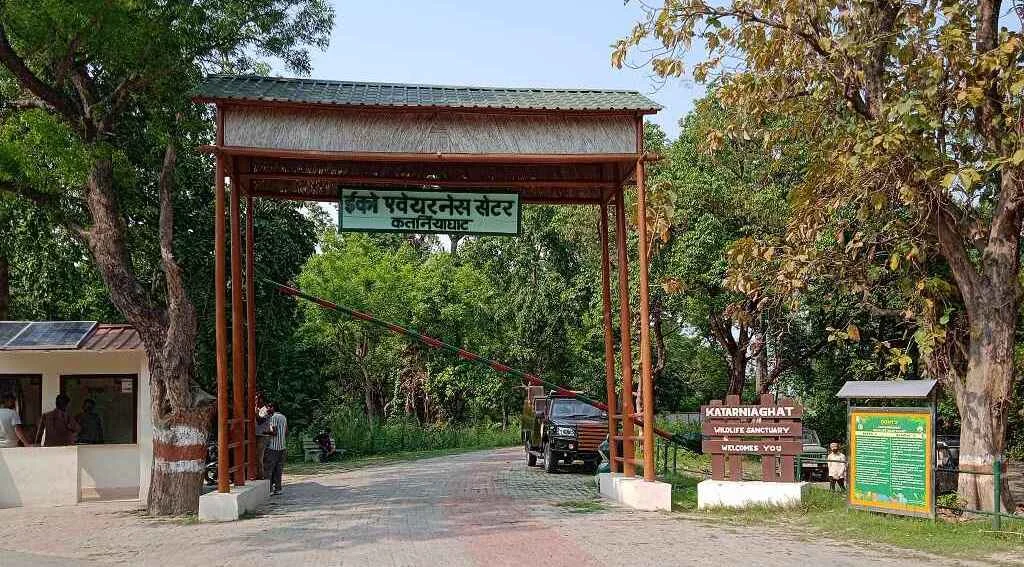
The Katarniaghat Wildlife Sanctuary is a protected area in the Upper Gangetic plain, Terai Belt in Bahraich district of Uttar Pradesh, India. It covers an area of 400.6 sq. km (154.7 sq mi). It was established in 1975. In 1987, it was brought under the purview of the Project Tiger, and together with the Kishanpur Wildlife Sanctuary and the Dudhwa National Park it forms the Dudhwa Tiger Reserve.
Nanpara Palace Ruins – A hidden historical gem
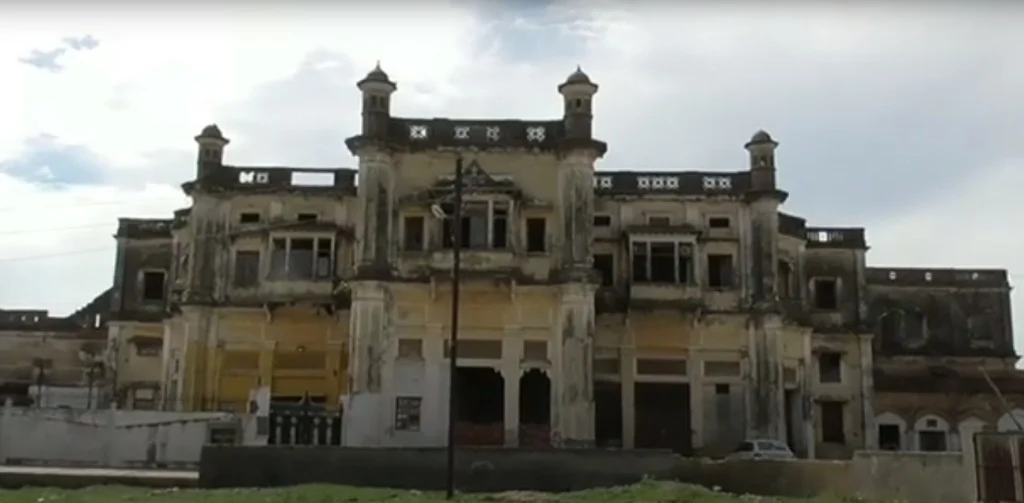
The Nanpara Taluqdari was one of the taluqdaris (feudatory states) in British India. The title of “Raja” was conferred on the Nanpara House in 1763 by the Nawab Shuja-ud-Daula, the King of Oudh and was then recognized by the British. With holding of 439 villages it was the largest Muslim taluqdars (landowners) in British India.
Shravasti – The ancient Buddhist city is about 90 km away
Shravasti is a town in Shravasti district in Indian state of Uttar Pradesh. It was the capital of the ancient Indian kingdom of Kosala which was ruled by Lava and the place where the Buddha lived most after his enlightenment. It is near the Rapti river in the northeastern part of Uttar Pradesh India, close to the Nepal border.
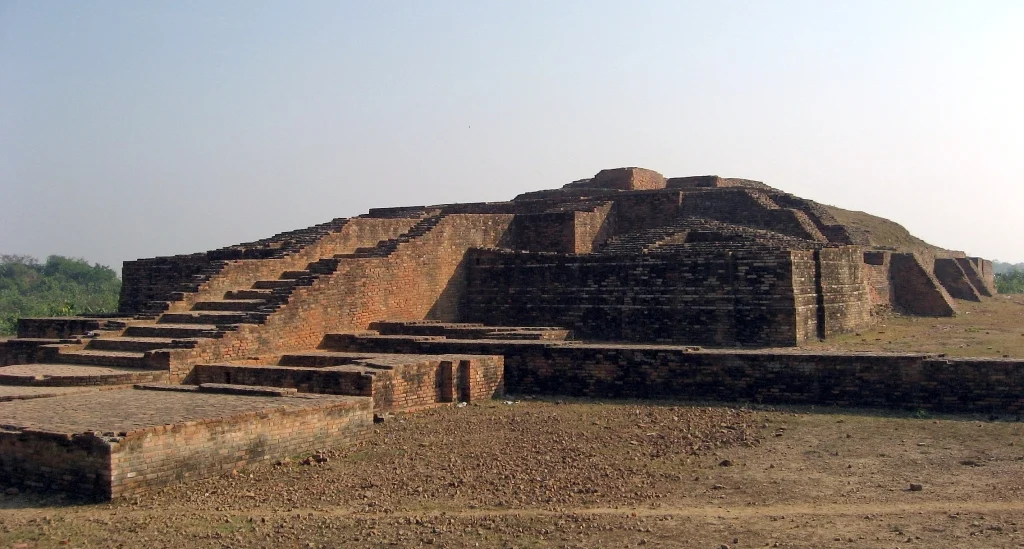
Shravasti is one of the most revered sites in Buddhism. It is believed to be where the Buddha taught many of his Suttas (sermons), converted many of his famous disciples, and performed his “Sravasti miracles” – “great miracle” and “twin miracle” – a subject of numerous historic reliefs, statues and literature in Buddhism.
Conclusion: Why You Should Visit Varahi Panch Sagar
Varahi Panch Sagar isn’t just a destination—it’s an experience that challenges your perception of temples. With its untouched aura, deep-rooted mythology, and fiercely powerful deity, it beckons those who seek a raw, unfiltered connection with the divine feminine.
If you’re looking for a sacred space away from tourist crowds, if you wish to feel the presence of Shakti in her most primal form, this temple is your calling.
FAQs:
The Varahi Devi Temple typically opens only for a couple of hours each morning, specifically from 5:00 AM to 8:00 AM. Devotees and pilgrims are allowed for darshan from 7:30 to 9:30 only.
Devotees often start their day with a simple puja, offering flowers, fruits, and incense to the Goddess.
Varahi Devi’s favorite colors are generally considered to be red and yellow (or gold).
Goddess Varahi is considered powerful due to her association with the earth element, her fierce and protective nature, and her connection to the Muladhara Chakra (root chakra).
Goddess Varahi’s favorite days are Panchami (5th tithi), Ashtami (8th tithi), and Navaratri (especially Ashada Navaratri).
Varahi is believed to be the Sakti of Varaha. In the Tantric text ‘Varahi Tantra’ mention has been made of five forms of Varahi i.e., Svapna Varahi, canda Varahi, Mahi Varahi (Bhairavi), Krcca Varahi and Matsya Varahi.

Nice information
This brought such joy and 💕 positivity to what started as a challenging day
This 💖 is pure gold. Your perspective on this topic feels so refreshing and genuine
Your dedication to quality content shows in absolutely ✨ everything you create